Our Plantations: Understanding the History of Slavery in Greene County
Published on:
June 18, 2026











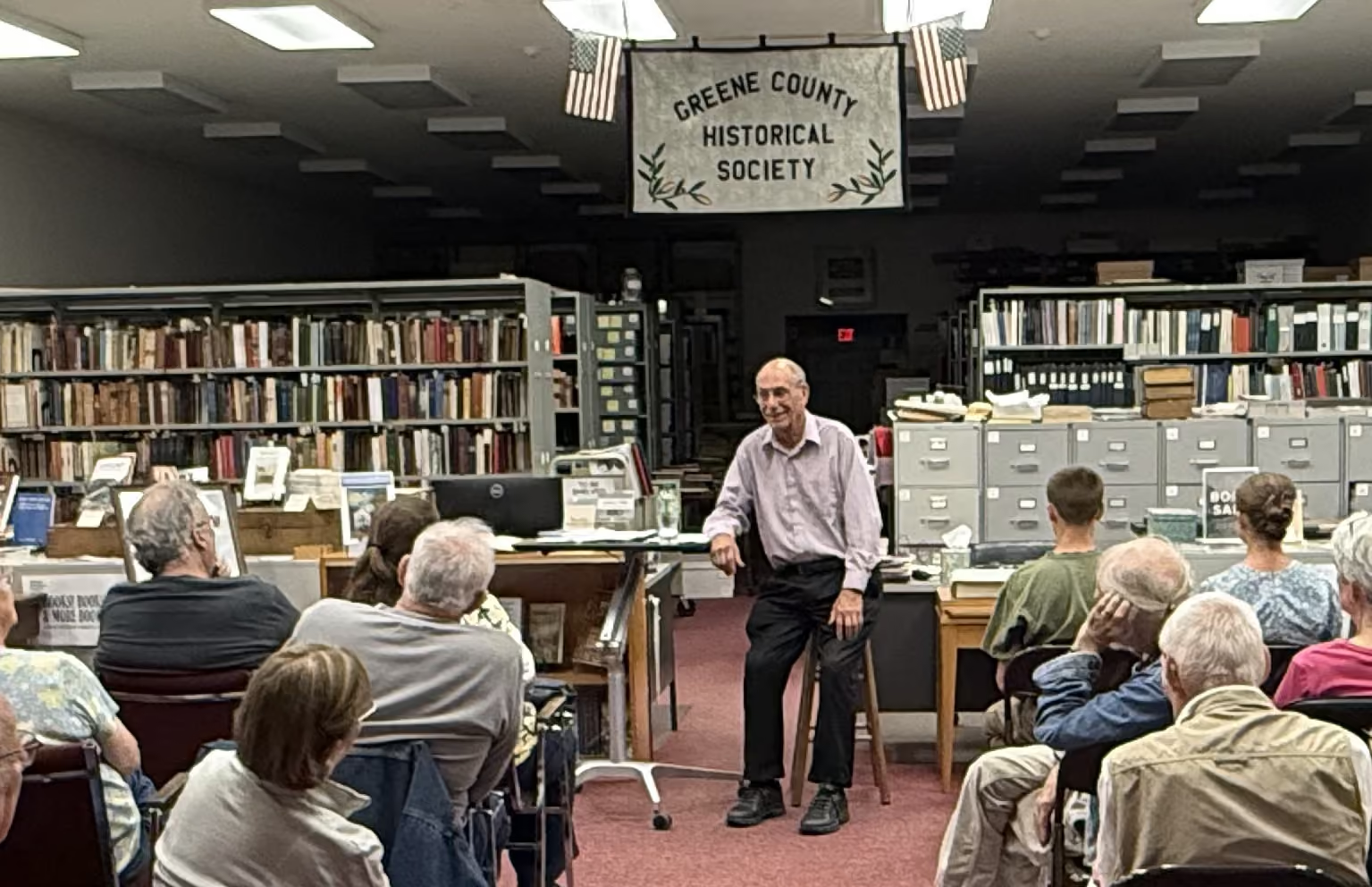
HAINES FALLS―The Mountain Top Historical Society will present a talk by Greene County Historian Jonathan Palmer on Saturday June 27, at 2 p.m. at the historic 1913 Ulster & Delaware Train Station in Haines Falls. The title of his talk is “Our Plantations: Understanding the History of Slavery in Greene County.”
Slavery was a foundational economic driver in Greene County brought to the region by early Dutch and English settlers who relied extensively on chattel labor to build their large agricultural estates. Far from being a localized footprint of the American South, rural Hudson Valley communities like Catskill, Coxsackie, and Athens operated substantial working farms that were managed by elite landowners while the grueling physical labor was executed entirely by enslaved individuals. Prominent local plantations were located at the Bronck House, the Van Vechten House, The Willows at Brandow point, and Cedar Grove, The Thomas Cole National Historic site.
Primary source materials like the Coxsackie Slave Register, town clerk birth records, and bills of sale (such as the sale of an enslaved person named Sara in 1790) preserved the vital information enabling historians to discover the history of slavery in Greene County.
For more information, and to register, email mthsdirector@mths.org or call 518-589-6657.





%20F.avif)