Leave the fawn and take (down) the feeder
Published on:
April 23, 2026









Fawns, baby birds, and other wild offspring will soon be arriving now that spring is taking hold. If you come across any young wildlife, they may appear to be abandoned, but their parents are usually pretty close. The urge to intervene can be overwhelming. However, well-intentioned interference poses risks to both baby wildlife and humans. When people try to “rescue” newborn wildlife of all types, it typically results in the death or permanent captivity of the animal they are trying to “save.”
Whitetail fawns are a great example. They are born with very little scent and since they can’t outrun predators at this age, the strategy for survival is hiding. Sometimes in tall grass, in leaf litter or near brush. All while the scent laden doe keeps her distance except for brief nursing sessions. This avoids drawing in predators, like coyotes and black bears, to her defenseless fawn. Fawns may be kept apart from their mothers for up to a day or more. When you first come upon what appears to be an “abandoned” fawn, listen closely. You’ll likely hear loud snorts from mama doe. She’s trying to draw you (a threat) away from her defenseless offspring. Unless you see a dead doe by a road near a waiting fawn, odds are the doe is intentionally staying away and will come back when the coast is clear and humans and pets have been away for a while. They then will disappear, frequently during the night.
Anyone who encounters a wild animal that is injured or obviously orphaned should call a trained and state Department of Environmental Conservation (DEC)-licensed wildlife rehabilitator. Licensed wildlife rehabilitators are the only people legally allowed to receive and treat distressed wildlife, and have the experience, expertise, and facilities to successfully treat and release wild animals.
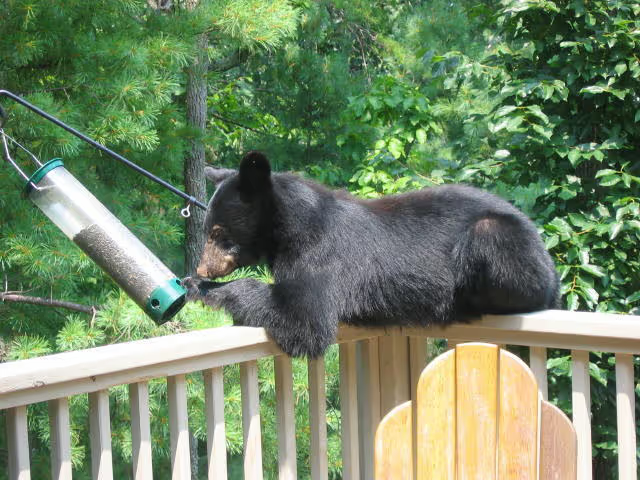
While you should leave the fawns, you definitely should take (down) the feeders. We’re talking about bird feeders that have been out all winter. Wild birds no longer need your assistance. DEC annually reminds those who use feeders or put out feed for birds where bears live (which is nearly all locations north of the New York City line), to take their feeders down in early spring. They should also begin cleaning up seed on the ground now that nature is providing plenty of natural forage for birds right on through the summer and early fall.
The problem is bird seed, like black oil sunflower and other seeds, are like M&Ms to bears. They are definitely among their favorite things. Spring bears are hungry, and new hard and soft mast are not yet available. Remnants of last year’s crop may be readily scavenged now that the snow is gone but bears are trying to make up for lost time after a long, cold winter.
Black bears emerging from their winter dens have depleted fat reserves and will search extensively for easily obtainable, calorie-dense foods. They typically take the path of least resistance to find food and put on weight. That frequently means looking for human sourced food like garbage and pet food. Repeat access to human food sources makes bears bolder and that can lead to human-bear conflicts around homes and residential areas, especially when natural food sources are scarce.
Trash should be secured and put out at the last possible moment on trash days as bears have that schedule timed and memorized. If you keep bees or chickens, you likely already know just about the only way to keep them safe is with a sufficiently-powered and well-maintained electric fence.
Feeding bears intentionally is illegal, but people may unknowingly attract bears by keeping a lot of outdoor clutter. Bears are curious, intelligent animals. They’ve learned by rooting around human items, they may find something resembling or leading to food.
Unintentional feeding can create problems for your neighbors and the surrounding community and even create a threat to people and their property. Last year, a Greene County man was seriously injured by a bear he surprised in the dark that was rooting through stored food and trash in his porch room.
By removing and/or securing food sources that might attract bears, the public is helping keep bears away from people, homes and neighborhoods, which helps keep bears healthy, wild, and safe. The public is also advised to remove any unnatural food attractants and encourage neighbors to do the same.
“If you care, leave them there” says it all. With spring in full swing and young animals more visible, it’s definitely time to “leave the fawns and take down the feeder.”
Happy hunting, fishing, and trapping until next time!
A resident of Durham, Larry is a retired captain with the New York State Department of Environmental Conservation.