DEC announces highest-ever bear harvest in southern zone
Published on:
March 25, 2026




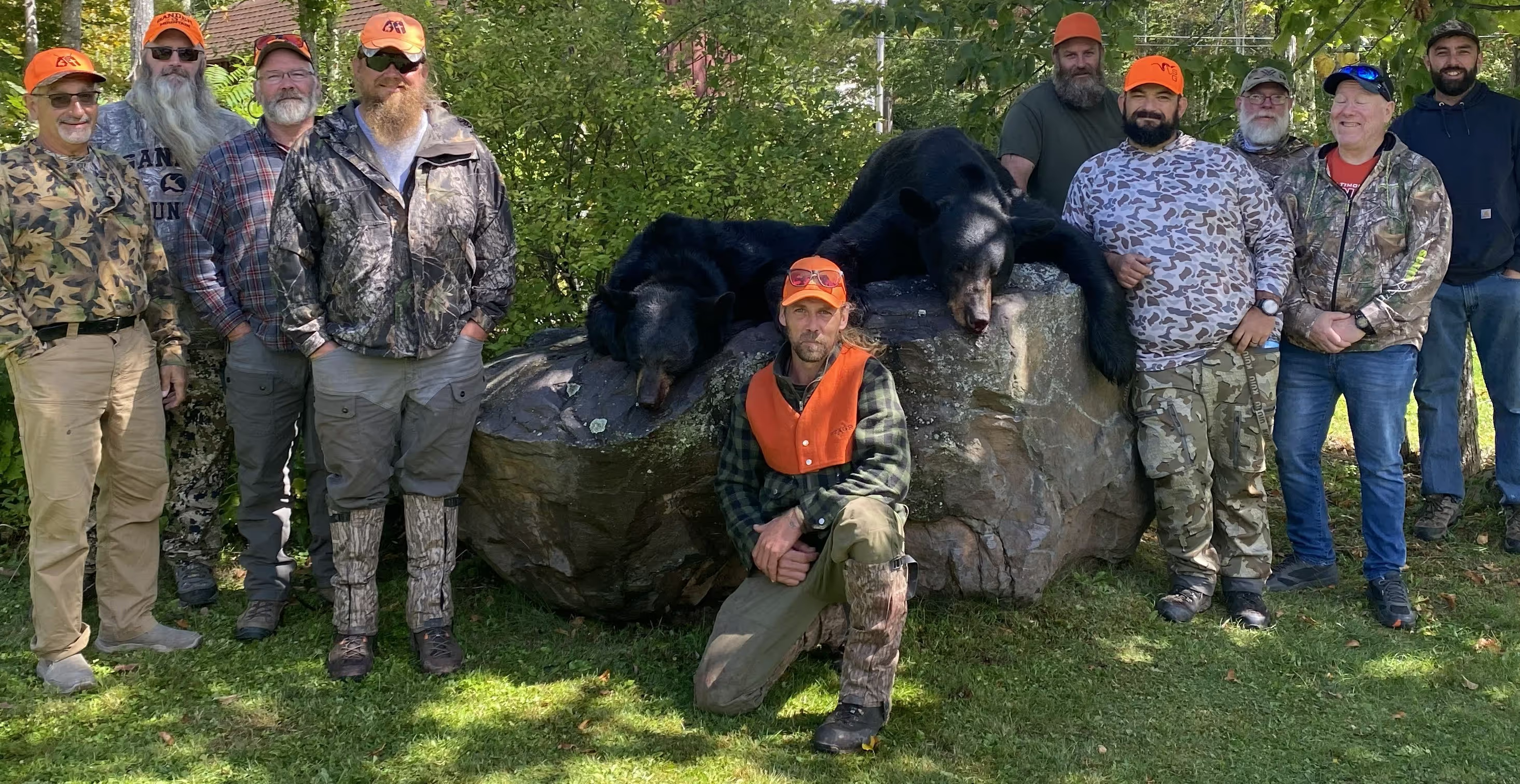





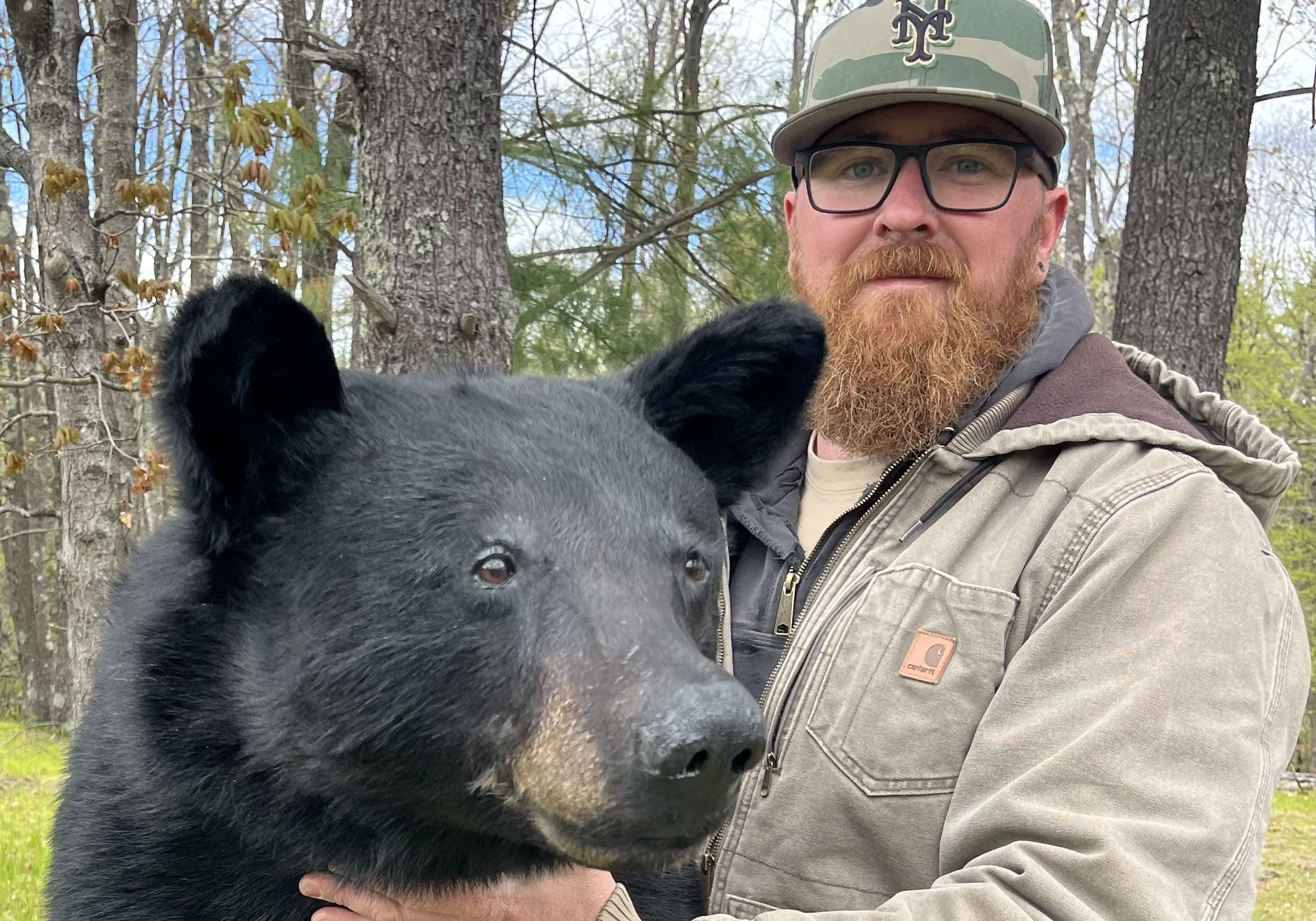
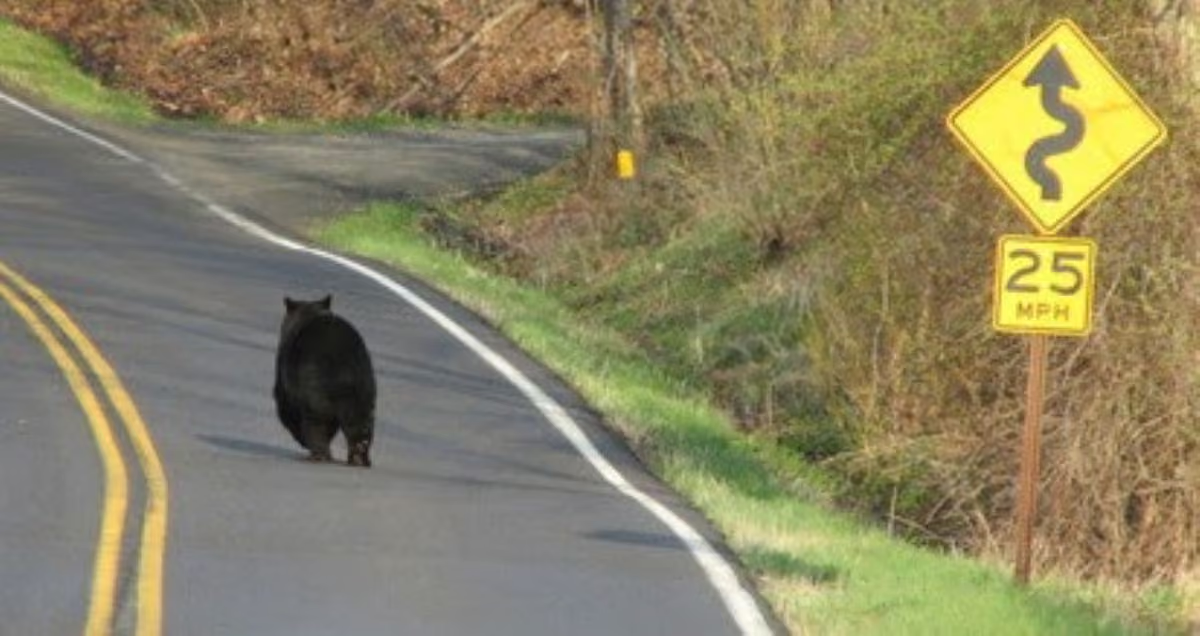
Biologists at the New York State Department of Environmental Conservation (DEC) report hunters in New York harvested an estimated 1,759 black bears during the 2025 hunting seasons. That’s the second highest statewide bear harvest on record in New York State.
The highest recorded statewide bear harvest took place back in 2003, when hunters killed a record 1,864 bears. DEC has been tracking of the annual bear harvest since 1955 . The overall 2025 bear harvest represents an approximately four percent increase from the 2024 season and is 18 percent above the 10-year average of the statewide bear take.
The 2025 harvest of 1,202 bears taken in the Southern Zone is a new record. DEC attributes that record take to the recovery and growth of New York’s bear population through successful wildlife management. Their goal has been to “maintain populations at levels that provide sustainable hunting opportunity and that are acceptable for local communities.”
Wildlife biologists must weigh the benefits of having a healthy, robust population of black bears against the need to avoid high densities of bears that can lead to human-bear conflicts. Decades ago, DEC biologists introduced an early black bear firearms season in selected Wildlife Management Units (WMUs) in the Southern Zone. That became a critical wildlife management tool to increase the take and slow down a bear population that was rapidly expanding from New Jersey and Pennsylvania into New York.
Long-term trends in bear harvest density suggest that bear populations remain relatively stable in both the Northern and Southern Zones following population expansions that contributed to peak bear harvest densities throughout the early 2000s.
The Northern Zone harvest estimate of 557 bears in 2025 was slightly lower than 2024, but still above the 10-year average.
The record-setting bear season in the Southern Zone is the culmination of a long-term pattern in New York’s bear populations. Over the past 70 years, bears gradually expanded their range in the State, and DEC began opening new areas for bear hunting…The expansion of bear range was particularly notable in the Southern Zone. The Southern Zone bear harvest exceeded the Northern Zone for the first time in 1998, and has accounted for the majority of New York’s bear harvest for the past 20 years.
Biologists report, “Northern Zone bears typically grow slower in the wilderness ecosystems of the Adirondacks but tend to survive to older ages than their Southern Zone counterparts. All but one of the oldest bears on DEC record were taken in the Northern Zone.”
Notable Numbers from the 2025 Bear Season:
• 74: The number of Wildlife Management Units (WMUs), out of 88 open to bear hunting, with reported 2025 bear harvests.
• 562 pounds: The dressed weight of the heaviest 2025 reported bear, harvested in the town of Olive, Ulster County, WMU 3C.
• 509 pounds: The dressed weight of the sixth heaviest 2025 reported bear, harvested in the town of Jewett, Greene County, WMU 3A.
• 668: The number of harvested bears from which DEC received pre-molar teeth to determine the bear’s age in 2025.
• 26 years: The age of the oldest bear harvested in 2024 (the most recent year for which age data are available). The bear was harvested in the town Mooers, Clinton County, WMU 5A.
• 21: Bears harvested per 100 square miles in WMU 3C, the highest harvest density of any WMU for the 2025 seasons.
Black bear harvest data are gathered from two main sources: harvest reports required of all successful bear hunters and the physical examination of bears by DEC staff, cooperating taxidermists, and meat processors. Harvest estimates are made by cross-referencing these two data sources and determining the rate at which hunters report their bear harvests in each zone. In fall 2026, DEC will send a commemorative 2025 Black Bear Management Coordinator Patch and a letter confirming each bear’s age to all hunters who reported their 2025 bear harvest and submitted a tooth for age analysis.
DEC’s 2025 Bear Harvest Summary report provides tables, figures, and maps detailing the bear harvest around the state. Past harvest summaries are also available on DEC’s website and through the interactive bear harvest dashboard. DEC’s Black Bear Management Plan provides information on how DEC determines black bear population objectives throughout the state.
In short, it takes a great deal of effort on the part of DEC to manage the black bear population in New York State. DEC’s policies have proven to be a resounding success. Kudos to the dedicated wildlife biologists that made it so.
Happy hunting, fishing, and trapping until next time!
News and Notes
Save the date for youth turkey hunting events coming up in April in Greene County
On Saturday, April 18 NYS ECO Lucas Palmateer and the Norton Hill Wildlife Club in partnership with the Northern Catskills Longbeards Chapter of the National Wild Turkey Federation and the New York Conservation Officers Association (NYCOA), are hosting a “Turkey Hunting Skills, Tactics, and Patterning Day” at the wildlife club at 946 Big Woods Road in Greenville.
This is in preparation for the 2026 Youth Turkey Hunt the following weekend where a limited number of mentors may be provided, upon request, to take youths aged 12-15 out hunting with their parent or guardian. Any and all youth hunters and their parent/guardians are invited and encouraged to attend the prep and skills day. All kids and their families are invited to bring their bird and/or their story to discuss with other youth hunters over a BBQ lunch provided by the Norton Hill Wildlife Club from 11 a.m. to 2 p.m. on Saturday, April 25. There will lots of giveaways and opportunities to commiserate with fellow youth hunters about the birds that did, and didn’t get away! Call ECO Lucas Palmateer at 518-478-1698 to check availability of mentors and for further information.
Remember to report poaching violations by calling the 24-hour ECO Dispatch at 1-844-DEC-ECOS.
A resident of Durham, Larry is a retired captain with the New York State Department of Environmental Conservation.


%20F.avif)