Statewide burn ban now in effect through May 14
Published on:
March 16, 2026









GREENE COUNTY―The annual statewide ban prohibiting residential brush burning begins March 16 and runs through May 14, as per the New York State Department of Environmental Conservation (DEC).
What Can I Burn?
The following types of open fires are allowed in New York State. All fires must consist of only charcoal or dry, clean, untreated, and unpainted wood.
- Campfires, small cooking fires, or any other outdoor fire less than 3 feet in height and 4 feet in length, width, or diameter. Information on building a safe campfire can be found below.
- Ceremonial or celebratory bonfires, including the disposal of flags or religious items if it is not otherwise prohibited by law or regulation.
- For most of the year, downed tree limbs and branches (also called brush) that are less than 6 inches in diameter and 8 feet in length, including branches with attached leaves, are allowed to be burned on-site in towns with total population less than 20,000 residents. The burning of brush is prohibited from March 16 through May 14 due to the increased risk of wildfires.
- Open fires to control the spread of invasive species are allowed with case-by-case approval from DEC.
- Prescribed burns, such as the burning of forest land to achieve a vegetative or wildlife management goal, can be performed, but only in accordance with DEC regulations.
What is Prohibited?
- Burning refuse, trash, tires, and other solid wastes. This includes burning trash or other waste in a burn barrel or similar device.
- Burning loose leaves or leaf piles.
- Burning pressure or chemically treated wood, painted or stained wood, or composite wood such as plywood and particle board. Firewood that has been heat treated or kiln dried is allowed to be burned.
Since 2009, DEC has enforced the annual brush burning ban to prevent wildfires and protect communities during heightened conditions for wildfires.
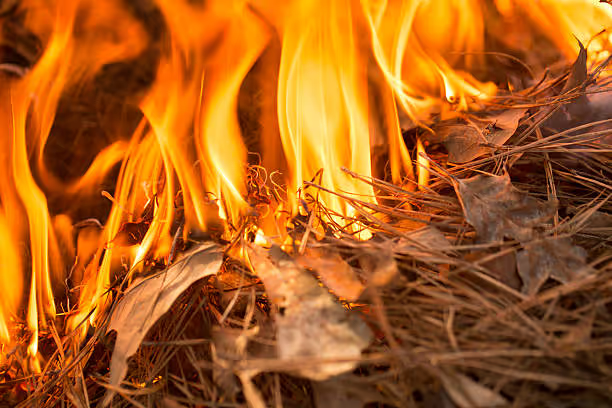
Even though most of the state remains blanketed in snow, warming temperatures can quickly cause wildfire conditions to arise. Open burning of debris is the single-largest cause of spring wildfires in New York State. When temperatures warm and the past fall's debris and leaves dry out, wildfires can start and spread easily, further fueled by winds and a lack of green vegetation.
Each year, DEC Forest Rangers extinguish dozens of wildfires that burn hundreds of acres. In addition, local fire departments, many of which are staffed by volunteers, all too often have to leave their jobs and families to respond to wildfires caused by illegal debris fires.
Forest Rangers, DEC Environmental Conservation Police Officers (ECOs), and local authorities can enforce the burn ban. Violators of the open burning regulation are subject to criminal and civil enforcement actions, with a minimum fine of $500 for the first offense.