Kratom concerns raised before Greene County legislators
Published on:
November 5, 2026




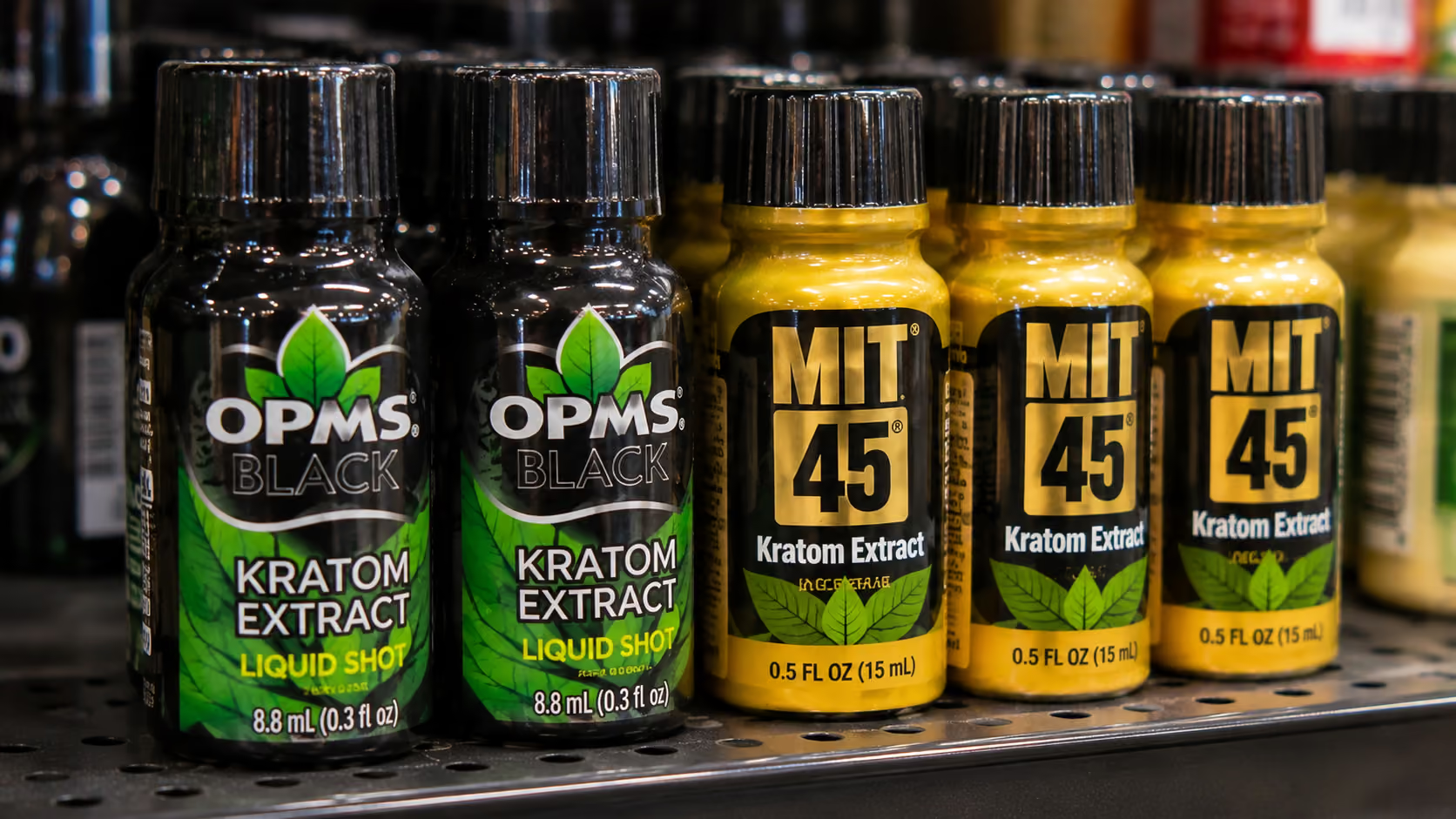





GREENE COUNTY—A substance sold in convenience stores, smoke shops and even beverages is raising concerns among addiction prevention officials, who warn that its growing popularity and potentially dangerous effects pose a threat to public health.
Tara Eldrid, director of prevention services for Columbia and Greene counties, appeared before Greene County legislators Wednesday night to discuss kratom, a substance commonly marketed as an energy booster, mood enhancer and pain reliever.
Eldrid, whose organization, Twin County Recovery Services, merged with the Addictions Care Center of Albany in September, said her concerns intensified after hearing from a parent whose 26-year-old son died following kratom use.
The young man, who lived in Rensselaer County and worked for a department of public works, had reportedly begun using kratom for energy before developing an addiction.
“He wound up aspirating on his vomit and died at the age of 26 years old,” Eldrid said.
The story prompted Eldrid to take a closer look at kratom use in Greene and Columbia counties.
“Unfortunately, I see it more and more often,” she said.
Kratom comes from the leaves of a tropical tree native to Southeast Asia. Of particular concern is 7-hydroxymitragynine, commonly known as 7-OH, a compound naturally present in kratom in small amounts. Concentrated and synthetically produced versions can contain substantially higher levels and produce powerful opioid effects.
The U.S. Food and Drug Administration has not approved kratom or 7-OH products for medical use, and their safety and effectiveness have not been established.
The distinction between natural kratom and concentrated or synthetic products has complicated efforts to regulate the substance, Eldrid said.
Adding to her concerns is how easily the products can be purchased, often from stores where customers might not expect to encounter potentially addictive substances.
“When we go into local smoke shops or local convenient stores, you will often see it near the front counter where you see cigarettes and chewing tobacco sold,” she said.
Of particular concern to Eldrid is the growing availability of kratom-infused beverages, especially given the popularity of energy drinks among middle and high school students.
During one of her visits to local retailers in Greene County, she discovered kratom beverages in their own refrigerated display.
“I purposely go to different gas stations to see what is around and what is being sold,” she said.
In the past, kratom was more commonly encountered among individuals attempting to stop using other substances. Now, Eldrid said, people are increasingly seeking treatment for kratom use itself.
“Now we are finding that this is their drug of choice,” she said.
“In larger doses this does have an opioid effect and withdrawing from kratom is no different than withdrawing from any other opioid,” she added.
A Centers for Disease Control and Prevention (CDC) study analyzing poison center reports from 2015 through 2025 identified 233 deaths associated with kratom exposure. Of those, 184 involved multiple substances, highlighting the difficulties in determining kratom's precise role in fatal overdoses.
In 2025, poison control centers across the country received 3,434 reports of kratom exposure, an increase of approximately 1,200 percent compared with 2015.
Earlier this year, New York enacted two laws regulating kratom, including a prohibition on sales to anyone younger than 21 and requirements for product labeling.
“Before that time anyone could purchase this. You could have an eight year old walking in and buying kratom,” Eldrid said.
But she questioned whether local retailers were aware of those restrictions, particularly the labeling requirements.
At the federal level, the Drug Enforcement Administration has moved toward classifying certain concentrated kratom-related compounds as Schedule I controlled substances, although the agency had not finalized such action as of November.
While federal action remains pending, some states and counties have pushed forward with their own restrictions. As of October 2026, 10 states had enacted outright bans on kratom-derived products. New York is not one of them, although several counties across the state have taken action.
Among them is Rensselaer County, which enacted a law prohibiting the commercial sale and distribution of both natural and synthetic kratom products, with limited exceptions for FDA-approved or physician-prescribed products. Violations carry civil penalties of $500 per item for a first offense and $1,000 per item for subsequent offenses, with possible criminal prosecution for willful violations.
Legislator Michael Lanuto, R-Catskill, said he has received numerous emails from concerned parents and has been pushing for local legislation.
“We were advised by counsel that our best course of action was the letter we sent to Albany,” Lanuto said.
That letter, sent last month after legislators adopted a resolution, urges Governor Kathy Hochul to sign legislation passed by the state Senate and Assembly targeting products containing high concentrations of 7-OH.
Under the proposed state legislation, businesses would be prohibited from knowingly selling, delivering or offering products containing 7-OH concentrations exceeding 2 percent of the product's total alkaloid content or one milligram per serving.
Lanuto, who previously worked in law enforcement, compared the emerging concerns surrounding kratom to the K2, or synthetic marijuana, epidemic that developed in the late 2000s. He recalled how police and public health officials worked together to identify businesses selling those products and enforce restrictions.
“And that fell on law enforcement working with public health officials going into the different bodegas and conducting those investigations and then shutting them down and enforcing the criminal laws on that,” Lanuto said.
But enforcing any restrictions on kratom could present challenges, particularly for agencies already facing substantial workloads.
For Eldrid, her role is focused on prevention and education.
“What I can do is provide education to our local retailers,” she said. “As for enforcement, I think that is going to be the hardest question because there hasn't been a clear picture sent down from the state.”
County Administrator Shaun Groden said he would circulate Greene County's letter to Hochul to other counties and ask the New York State Association of Counties to include kratom on the agenda for its February conference.
While Eldrid said she was unaware of any kratom-related deaths in Greene County she emphasized that education remains a priority, particularly when it comes to helping young people and their parents understand the substance and the potential risks associated with its use.
“It is a huge concern to me, not just for our youth but for our community as a whole,” she said.