Greene EMS awarded grant to help keep blood on rigs
Published on:
July 6, 2026





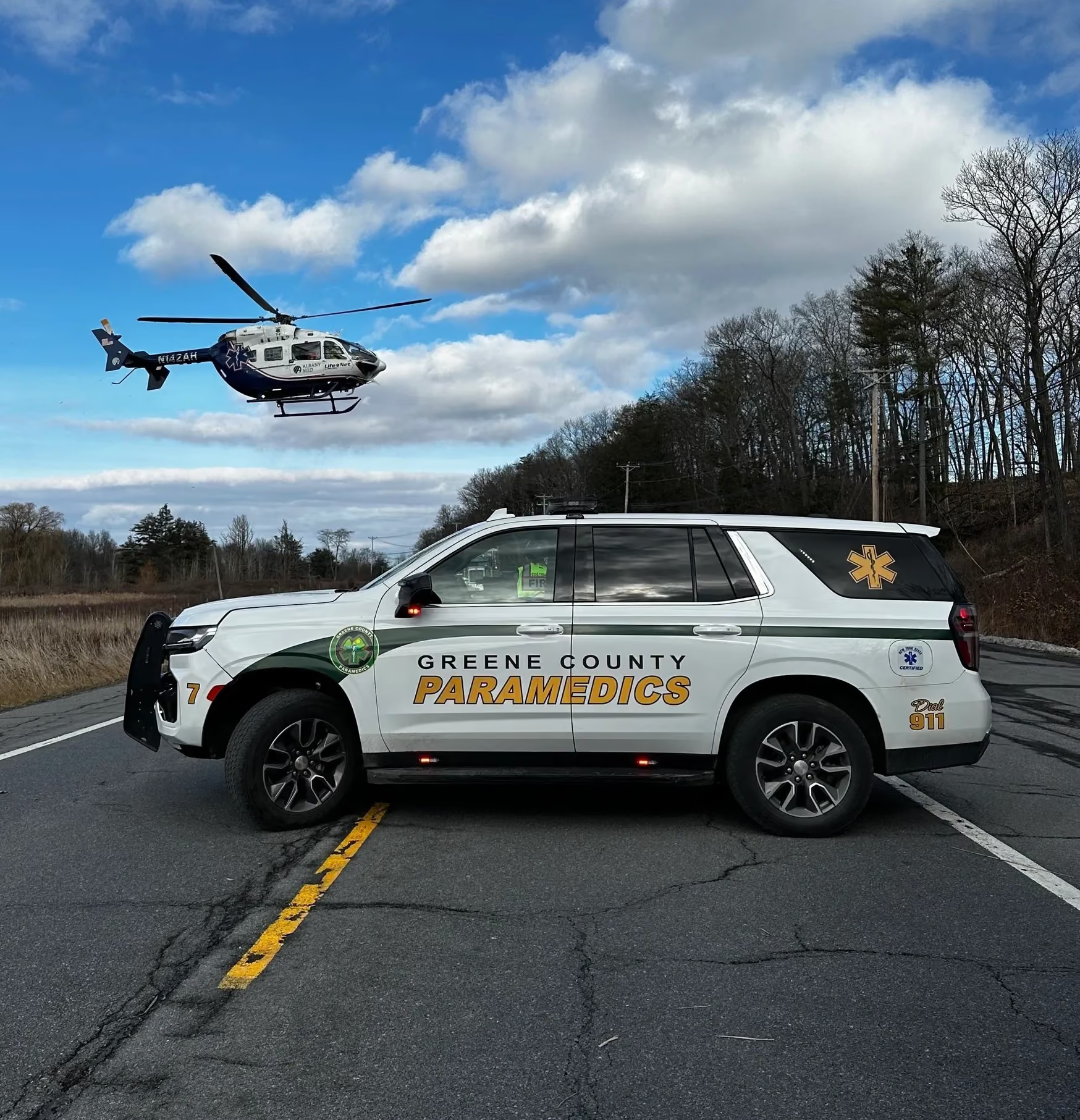




CAIRO―A recently awarded grant will help Greene County Paramedics (GCEMS) purchase refrigeration equipment essential to starting a Prehospital Blood Program, enabling medics to give blood to critically injured patients.
The $44,400 in funding comes from the Berthe M. Cote Foundation, Inc., a New York-based private charitable foundation dedicated to supporting healthcare entities.
“As an organization, our board of directors has always strived to make sure we have the best trained and best equipped paramedics. As new treatments have been added to the protocols we have always been among the first agencies to train our paramedics and add the treatment,” said Mark Evans, president of GCEMS that operates five advanced life support fly-cars from five stations spread across the county.
“Adding blood administration is consistent with our ongoing effort to provide the highest level of care possible to our patients,” Evans said.
In September of 2024, Gov. Kathy Hochul signed legislation that authorizes ground ambulance and advanced life support first response services to store and distribute blood and initiate and administer blood transfusions, mirroring authorizations currently provided to med flights in the state.
But nearly two years later, the state Department of Health (DOH) has yet to issue regulations which it says are expected to come out this summer.
GCEMS has to first work through regional and then state procedures to gain approval to carry blood, develop internal policies and procedures and train its paramedics.
“In a county where ground transport to a trauma center can exceed 80 minutes—and flight is not always an option—that adds up fast,” said Steve Near, chief of operations at GCEMS.
“This grant directly addresses one of the most challenging realities of emergency care in a rural county like Greene County―time,” he said.
As of last year, only about 2-3% of EMS agencies in the United States carried blood on their rigs. If universal access to prehospital blood were implemented, an estimated 10,000 lives could be saved annually, according to a report from the American College of Surgeons.
“Research out there says every minute a trauma patient goes without blood increases their chances of not surviving by two percent,” said Near. “The Berthe M. Cote Foundation’s investment means our paramedics can start closing that gap before the patient ever sees a hospital.”