Drug overdoses continue to decline in Greene County
Published on:
May 29, 2026









GREENE COUNTY―Reported drug overdoses in Greene County have steadily declined over the last five years, dropping by 48% from 2021 to 2025.
The trend coincides with new provisional figures from the Centers for Disease Control and Prevention (CDC) National Vital Statistics System that show a reduction in overdose deaths throughout New York State from 2022 through 2025.
In 2021, Greene County had 130 reported overdoses, 21 of which were fatal. By 2025, there were 68 reported overdoses and two resulted in death, according to the Overdose Detection and Mapping Application Program and Greene County Coroner’s Office.
Hannah Calhoun, executive director of the Columbia-Greene Addiction Coalition, said the new statewide data is incredibly promising.
“Locally, I believe this reflects the real impact of effective partnerships and coordinated efforts among public health, local government, law enforcement, healthcare providers, and community organizations on both sides of the river,” Calhoun said.
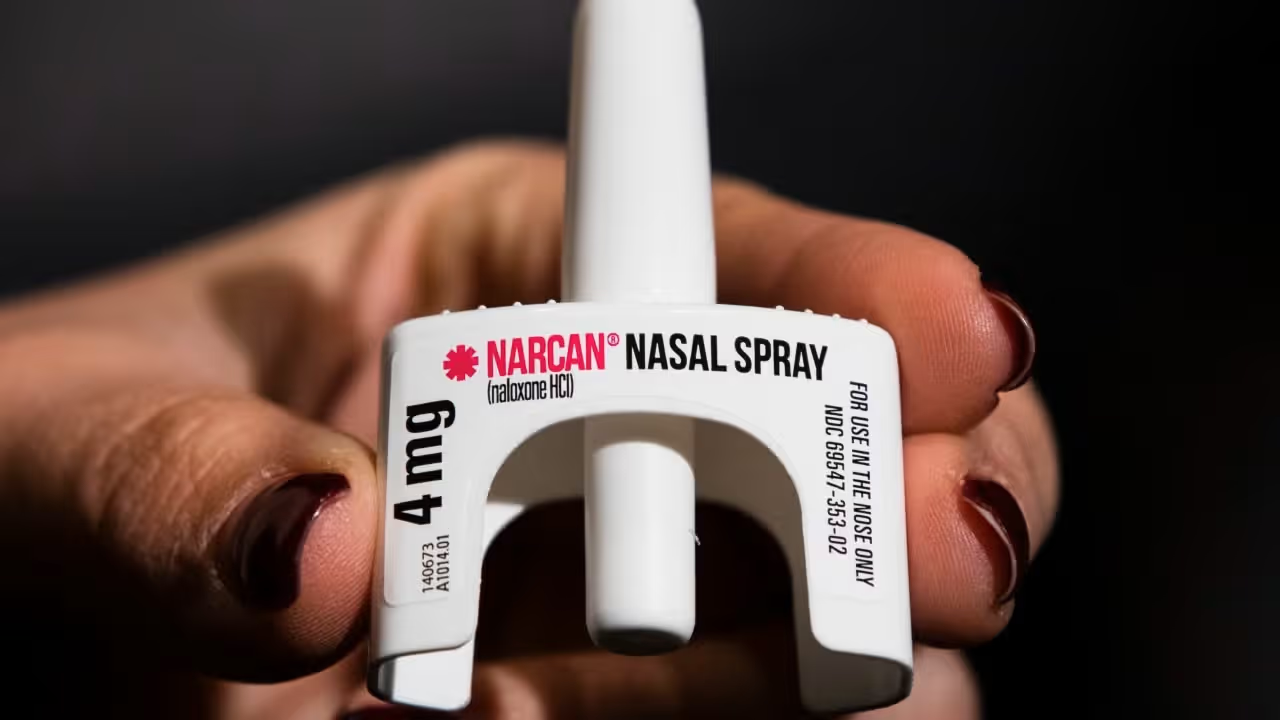
“Through expanded harm reduction efforts in both [Greene and Columbia] counties—including increased access to naloxone [Narcan], fentanyl and xylazine test strips, the Never Use Alone Hotline, peer support services, and low-threshold medication for opioid use disorder (MOUD)—our loved ones are not dying,” she added.
As Calhoun pointed out, Greene County experienced severe impacts from the opioid crisis that peaked during the Covid-19 pandemic with 110,000 deaths nationwide in 2022 alone. The surge was largely due to the rapid spread of fentanyl in the illegal drug supply, combined with isolation, economic stress and disrupted treatment services.
In 2014, Greene County’s opioid-involved overdose death rate was nearly twice the upstate New York average. By 2021, that rate had increased by 146%, and Greene County ranked second among upstate counties for opioid overdose death rates and first for heroin-involved deaths, Calhoun explained.
In 2024, Greene County still had the fourth highest rate of upstate opioid-involved overdose deaths, while Columbia County ranked twenty-sixth, she said. That year, Greene County had 78 reported overdoses, 12 of which were fatal.
Over the last five years, fentanyl was the most common substance involved in overdose deaths in Greene County. But the proportion of deaths involving fentanyl has plummeted from 90% in 2021 to 0% in 2025.
And since 2021, not a single overdose death in Greene County has involved heroin. Rather, prescription opioids and benzodiazepines are becoming increasingly prevalent in fatal overdoses.
Still, across the state, in 2025, the annual number of drug fatalities fell for a third year in a row and decreased by 44.9%.
“The decreasing number of overdose deaths reflected in the data is a good sign and shows the work being done is making a difference, but more must be done to reach all communities and ensure we can achieve an overdose-free generation,” said New York State Health Commissioner Dr. James McDonald.
“We not only collect and analyze data but also use it to inform and take quick action when new drug threats or patterns of use―such as polysubstance use of stimulants and opioids― arise,” McDonald added.
This month, the U.S. Drug Enforcement Agency (DEA) issued a public safety advisory on what it called a heightened threat of fentanyl mixed with emerging synthetic drugs. Law enforcement and public health officials are seeing fentanyl combined with highly potent substances such as xylazine, nitazenes, cychlorphine, and medetomidine, according to the DEA. Xylazine and medetomidine are used by veterinarians to sedate animals and are not opioids, meaning naloxone may not fully reverse their effects.
Calhoun agreed that while the progress shown by the latest statewide data is encouraging, the work is not over.
“As the drug supply continues to change, public awareness, access to services, and community education remain essential,” she said.
“This includes continuing to work with our partners to reduce stigma, educate residents on effective overdose prevention strategies, and promote the safe use, storage, and disposal of medications to help prevent misuse and related harms, Calhoun said.
For help, resources and access to free harm reduction supplies, visit columbiagreeneaddictioncoalition.org.