County gives update on Platte Clove Bridge rehab
Published on:
August 7, 2026





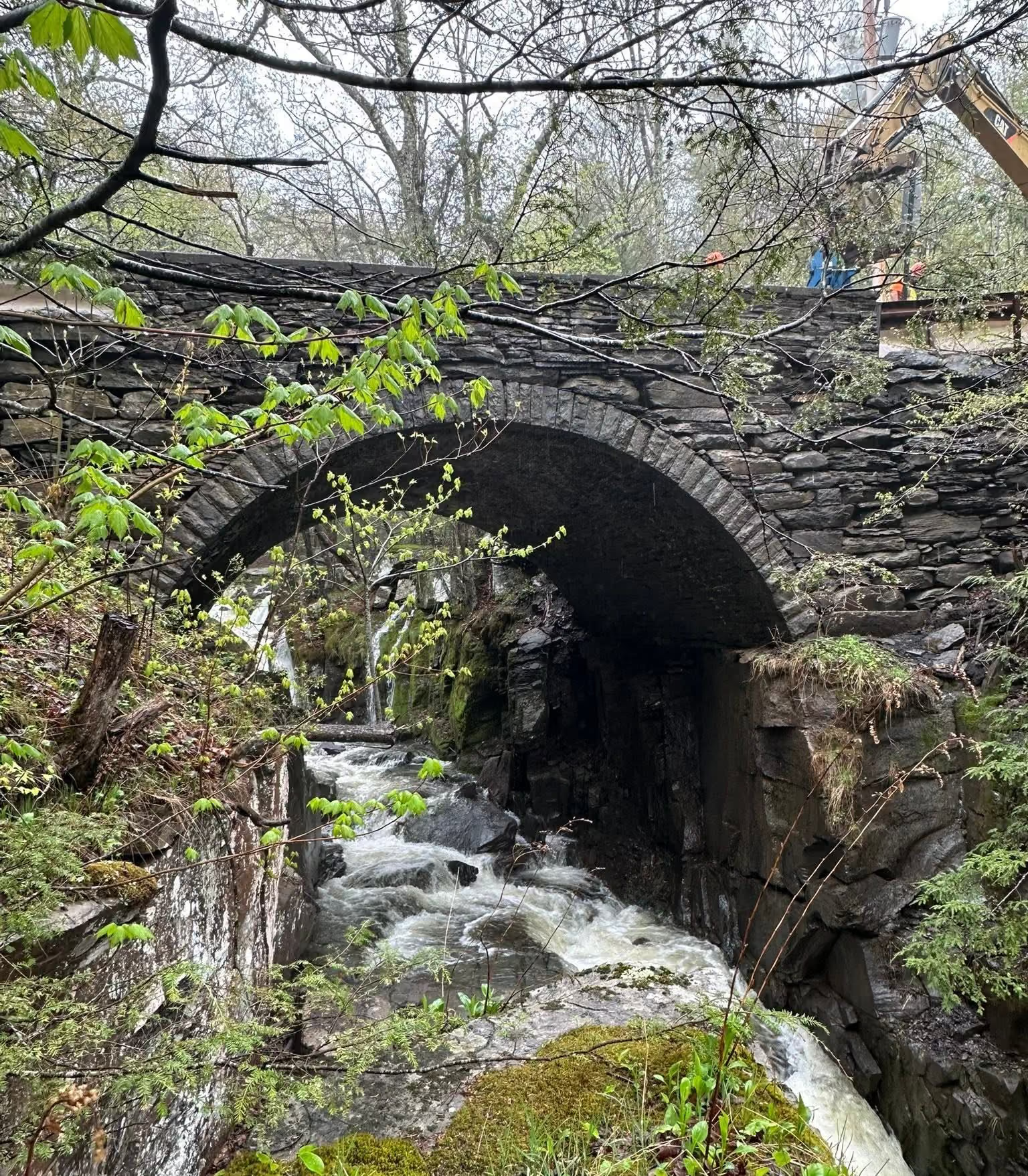





HUNTER―The message is the same on the treasured Platte Clove Bridge even as the Greene County Highway Department goes ever-so-carefully toward making necessary and significant structural repairs
County Highway Superintendent Scott Templeton was on hand at the Hunter Town Hall last week to give an update on the startup of the project that represents more to the community than merely getting from here to there.
Templeton was joined by engineers from CDM Smith, explaining the delay resulting from red flags that were issued by the New York State Department of Transportation (DOT) on the spectacular span way out on County Route 16.
“The structure is set on bedrock. The latest inspections found a crack in the bedrock,” Templeton said, noting “several” lesser yellow flags have previously been posted at the site.
“We are monitoring it [monthly] making sure the rock isn’t moving. We want to take our time. We don’t want to repair this one and be back in the same situation in the future,” Templeton said.
Traffic on the remote overpass has been limited to single lane for more than a year and will continue that way at least into next year.
Rehabilitation and reconstruction will hopefully commence as soon as the weather is amenable in the spring of 2027, presuming a final design is presented and the plans put out to bid by late this fall.
The steep road leading from West Saugerties to the top of what is known as Devils’ Kitchen will be closed on the lower end during the work that would be on a one construction season deadline, officials say.
“This is a very unique structure. If we just wanted a contractor to rip it out and replace it, we could do that basically anytime,” Templeton said.
“We are trying to keep this structure the way it is,” Templeton explained, in particular the underside of the stone archway that rises over what is colloquially known as Mossy Brook, a tributary of the Plattekill.
Platte Clove is famous for its craggy cliffs and landscape that is essentially untouched by humans other than the heartiest hikers and ice climbers.
“The Lord ran out of soil, so he just threw boulders down there,” says David Kukle, a longtime Hunter town councilman and president of the Mountain Clove Scenic Highway group.
“It’s definitely another world,” Kukle said, noting the section of rock beneath the bridge, tumbling into a deep gorge, is affectionately called Hell’s Hole.
But the Platte Clove Bridge and ruggedly unscathed terrain surrounding it are not considered sinful.
“Everyone in the room [at the information meeting] absolutely treasures that bridge,” Kukle said. “There are a lot of emotions about it. No one likes the inconvenience. But I am very thankful the county is taking this on, the fact that they took our concerns to heart. It’s really remarkable.”
When the county initiated the project, it was estimated the cost would run somewhere between $1.2 million and $1.8 million for construction. But that was three years ago and a period of intense escalation in pricing has occurred―a reality expected to push the bottom line skyward.
The expense is assuredly “subject to change since then,” Templeton said, emphasizing the DOT, which holds final approval, is well aware of the marketplace and the importance of the Platte Clove Bridge.
Creation of the bridge dates back to 1895 and it has experienced visible shifting over the past century and a third.
The county has already moved the entire south parapet wall―the top layer of the bridge―preventing it from slipping into a series of waterfalls and plunging into unretrievable depths.
Templeton says the bridge has been slowly but surely shapeshifting over the cold and snowy decades, and aged stonework on the exterior-most walls has visibly opened. That will be removed and reinforced, using a combination of concrete and original stone, recut to fit the makeover and keep the historic appeal.
Some preliminary repairs have been made by the county.
The fresh water flowing underneath the bridge feeds the reservoirs and water supply for the town of Saugerties.
When the job is completed, the roadway will carry “full legal loads,” Templeton said, emphasizing, “the state and county do not want restrictions on our roads.”






%20F.avif)