Before it was Burger King, it was Dairy Queen
Published on:
November 13, 2026



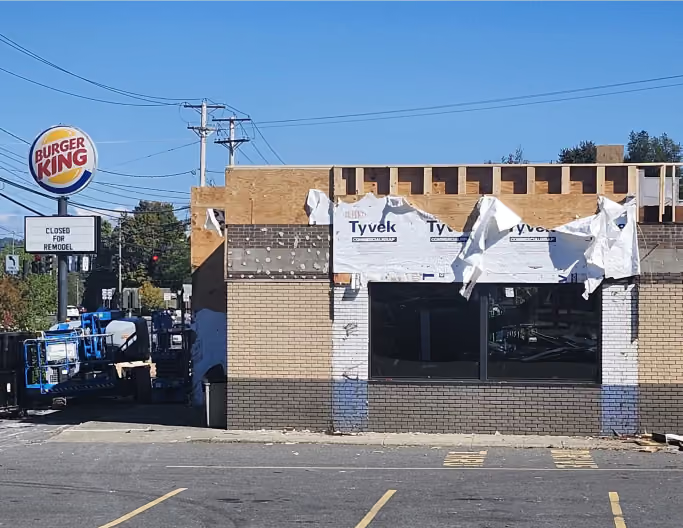





CATSKILL—The Burger King at 241 West Bridge Street is getting a major makeover, marking the latest chapter for a property whose history is anything but vanilla.
Before it was the home of the Whopper and before Carrols became a familiar name in the regional fast-food landscape, the property was known for something a little sweeter.
It was a Dairy Queen.
Local attorney and historian Ted Hilscher says Dairy Queen actually operated at two locations along what was then simply Route 9W: the original stand where Burger King is now and another just down the street.
"First, on the site of the current Burger King, next to the New Catskill Theatre I believe it was called,” said Hilscher. “And across 9W from the taxidermy, once located in the fork between 9W and Cauterskill Avenue.”
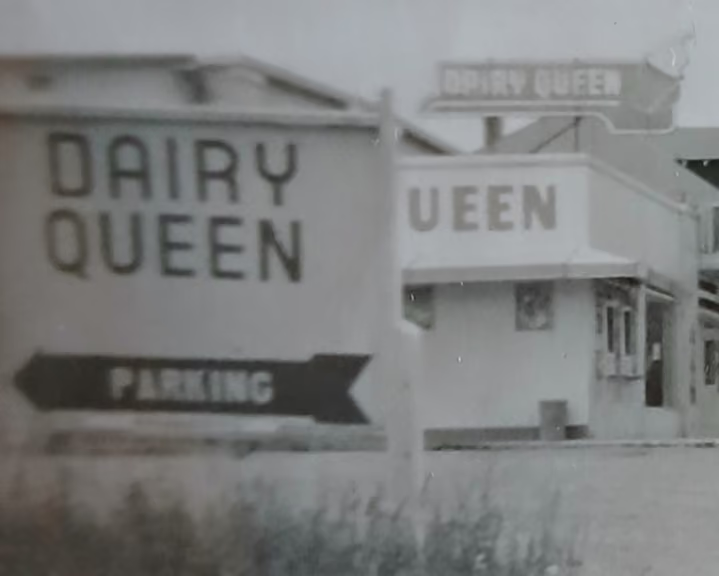
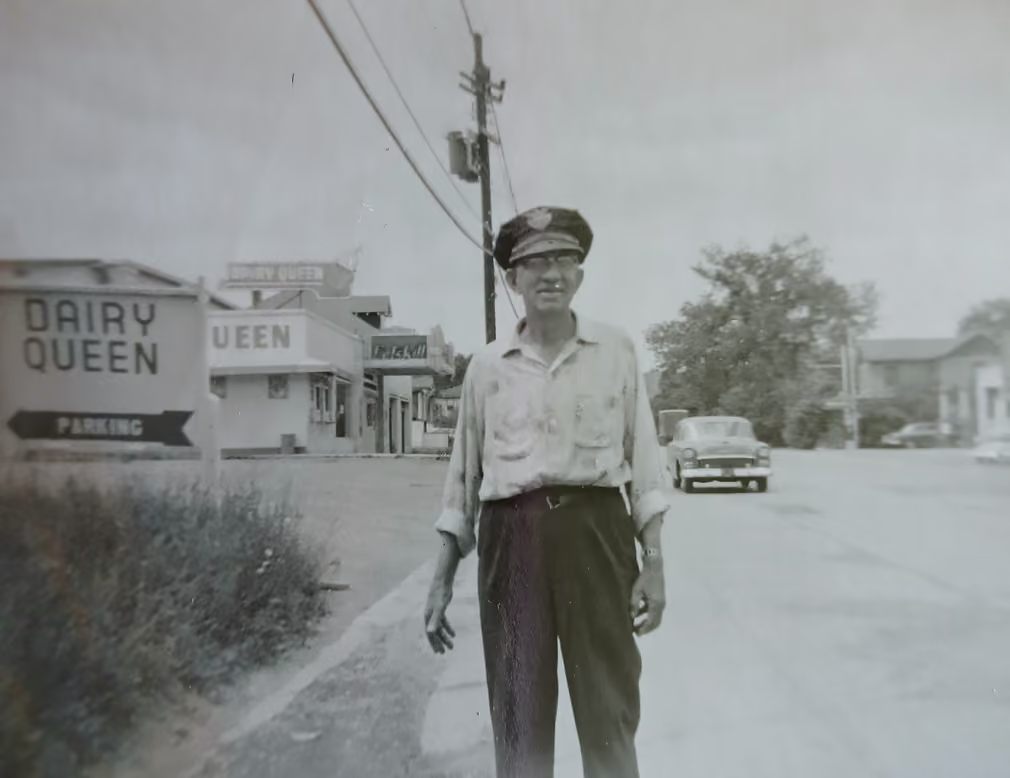
The original Dairy Queen is believed to have opened around 1953. A period photograph shows the Dairy Queen and theater together, with a crossing guard for neighboring Grandview Elementary School standing in the street in front of the complex. The school's proximity made Dairy Queen a natural after-school and summertime stop for neighborhood children and their families.
Greene County resident Susan Weber said her grandfather, William Schloss, and uncle, Irwin "Corky" Schloss, installed the building's heating system, as well as the seats for the adjacent theater.
“My mother related that she went on her first date there with my dad in 1954,” said Weber.
"I remember all the buildings and I grew up in the nearby neighborhood," she added.
The opening of Simmons Plaza brought further changes to the Route 9W corridor, Hilscher noted.
"By 1970, Simmons Plaza was built, which is where a chain department store, Big Scott, and later, Jamesway, was located behind a large parking lot," he said. "This was north of the bowling alley, about where Walmart is today.”
“It is likely that when Simmons Plaza opened, Dairy Queen moved to its new location, in a new building, on 9W, in front of Simmons Plaza, to take advantage of increased parking,” he added.
For generations of local residents, the restaurant represented more than an opportunity to grab a hamburger or a creamy cone. It was a family operation, a gathering place and a piece of the community's commercial landscape that has largely disappeared from memory.
But the story of Dairy Queen itself began nearly three decades earlier.
In 1938, father-and-son inventors J.F. McCullough and Alex McCullough developed a soft-serve ice cream formula that would eventually become the foundation of an international franchise.
They partnered with Sherb Noble, an Illinois ice cream shop operator who agreed to test the new product. On August 4, 1938, Noble held an extraordinary promotional event at his Kankakee shop: Customers could eat all the soft-serve ice cream they wanted for just 10 cents.
The experiment was an immediate success. More than 1,600 servings were distributed in approximately two hours.
The response demonstrated that the new frozen treat had considerable commercial potential. Two years later, on June 22, 1940, Noble and the McCulloughs opened the first official Dairy Queen restaurant in Joliet, Illinois. The name reflected Noble's appreciation for the source of all that cream, the dairy cow, which he famously called "the queen of the dairy business."
The concept grew rapidly. By 1955, the franchise system had grown from approximately 100 locations in 1947 to 2,600 restaurants nationwide.
Dairy Queen gradually expanded beyond ice cream, introducing malts and shakes in 1949, banana splits in 1951 and the Dilly Bar in 1955. The Brazier concept brought hamburgers, hot dogs and French fries into the equation, helping establish Dairy Queen as something more than an ice cream stand.
It was a business model that combined inexpensive treats, family outings and quick meals. By the time it reached Catskill, that combination had found a ready audience.
According to Saugerties historic preservationist Peigi Mulligan, her uncle, George Vascellaro, operated the original Dairy Queen on West Bridge Street with his wife, Millie, and their two sons, Mike and George, beginning in 1967. Mulligan and her sister also helped out around the restaurant.
But for Mulligan, the memories are less about dates and business arrangements and more about the sights, sounds and smells of the restaurant.
"I almost forgot the smell of the hamburgers being cooked on charcoal gas grill and the soft seeded rolls,” she said. "From the ordering windows you could watch them cook the food."
"The best part was the aroma and taste of the char on the freshly made burger,” Mulligan said.
She remembers preparing the ice cream that would be served to customers through the window, helping with the daily operation of the family business.
And then there were the milkshakes.
"Our uncle used to make myself and my sister shakes that were so thick if you turned them upside down they wouldn't come out—it was the Blizzard before they had the Blizzard on the menu,” Mulligan said, referring to the famous treat that did not make its debut until 1985.
The restaurant also had plenty of room for customers.
The original parking area was entirely unpaved, consisting of dirt that extended around the building, Mulligan said. Patrons could park in front of the restaurant, as well as along the sides, making the area considerably wider than the more defined arrangement found at today's Burger King.
The restaurant's seasonal closing around October 9 each year invited customers to take advantage of an end-of-season sale, including Sunday milkshakes for just 25 cents, along with additional daily specials.
Eventually, the original Dairy Queen building at 241 West Bridge Street would disappear.
According to Mulligan, her family relinquished the business during the 1970s. The property subsequently underwent a significant transformation, with the original structure demolished and replaced by a restaurant operated under the Carrols Corporation name.
Michael Camadine, who spent a combined 32 years working at and managing the Carrols restaurant and the Burger King that followed, said the transition took place in 1973.
"Carrols was no small operation," Camadine said.
Founded in 1960, Carrols Systems became one of the major regional fast-food franchise organizations in the northeastern United States. Under the direction of Herbert N. Slotnick, the company grew into a major player in the emerging fast-food industry.
By the middle of the 1970s, Carrols had expanded to more than 150 restaurants across the Northeast.
Camadine said that the Catskill restaurant was part of a much larger regional operation and that the new building represented the latest in fast-food restaurant design at the time.
The company entered into a franchise agreement with Burger King in the mid-1970s. Under that arrangement, selected Carrols locations would be converted to Burger King restaurants over the following years, while locations that could not be converted were phased out.
Rather than simply disappearing, Carrols effectively transitioned into a major Burger King franchise operator.
For Catskill, that meant another change in the identity of a familiar local restaurant spot.
According to Camadine, the Catskill Burger King was considered the third-busiest Burger King in the entire Northeast up until 1992.
Although the Vascellaro family's original Dairy Queen operation at the West Bridge Street property came to an end, the family's association with the ice cream business did not necessarily end there.
Mulligan explained that her aunt, Virginia Wodzenski, would go on to own and operate the Dairy Creme restaurant in Palenville, near the border of Greene and Ulster counties, across the street from the current Catskill Mountain Lodge.
"There used to be a video rental next door to that location as well," she said, describing another familiar feature of the local commercial landscape.
Dairy Queen eventually established a presence in nearby Leeds, where a restaurant opened along the Route 23 bypass in May of 1971. It is now home to Barnwood Restaurant.
That location developed its own following among local residents.
"Dairy Queen had an Addams Family pinball machine that you could play for free and I would hang out while my sister worked and eat blizzards," said local resident Jimmy Hines.
Today, back on West Bridge Street, another transformation is underway.
The Burger King is being remodeled into one of the chain's new "Sizzle" restaurants, featuring a modernized exterior, digital ordering kiosks, an updated drive-thru and improvements to pedestrian access. Construction is expected to be completed sometime next month.
So, while the buildings and signs have changed over the decades, the memories of ice cream, hamburgers and family outings remain part of the property's history―and future.