What are you doing for our nation's 250th?
Published on:
January 27, 2026










By Jonathan Palmer
Greene County Historian
Two hundred and fifty years ago this July, the Declaration of Independence was signed in Philadelphia by the members of the Second Continental Congress. In promulgating this document, events were set in motion that would culminate in the formation of the United States and the initiation of a new experiment in representative democracy in North America.
Much uncertainty surrounded the events that led to the drafting of the Declaration, and no one at the time could foresee whether the end result of their efforts would be utter ruin or liberation. The nature of the victory won by the Continental Congress and its army was almost implausibly miraculous; a superpower cast aside by the citizens of a far-flung colony, possessing the audacity and wherewithal to embroil that superpower’s greatest foes in a common struggle for liberty.
In this way the events of the Revolution became a memory worthy of celebration and memorialization almost overnight―an integral component of the identity of a new nation whose first great victory seemed to ordain it with the promise of certain greatness.
The memory of the Revolution, like the nation formed from that war, has transformed and evolved with the passage of time. The fiftieth anniversary of the United States was a Jubilee attended by the last surviving founders and orchestrated by the first generation of citizens to inherit the mantle of self-rule from the framers of the Constitution. Lafayette himself, the last surviving field commander of the Revolutionary army, toured the young nation to bear witness to the successes fostered by the sacrifices of the patriots of 1776.
The Centennial celebrations of 1876 were likewise a triumph―a nation newly reforged from the destruction of the American Civil War was given the opportunity to display for the world a country rapidly advancing to the forefront of mechanical innovation and industrial power. Exhibitions and commemorations were permeated with a distinctly dual vision that sought to celebrate the past and invite the promising future all at once.
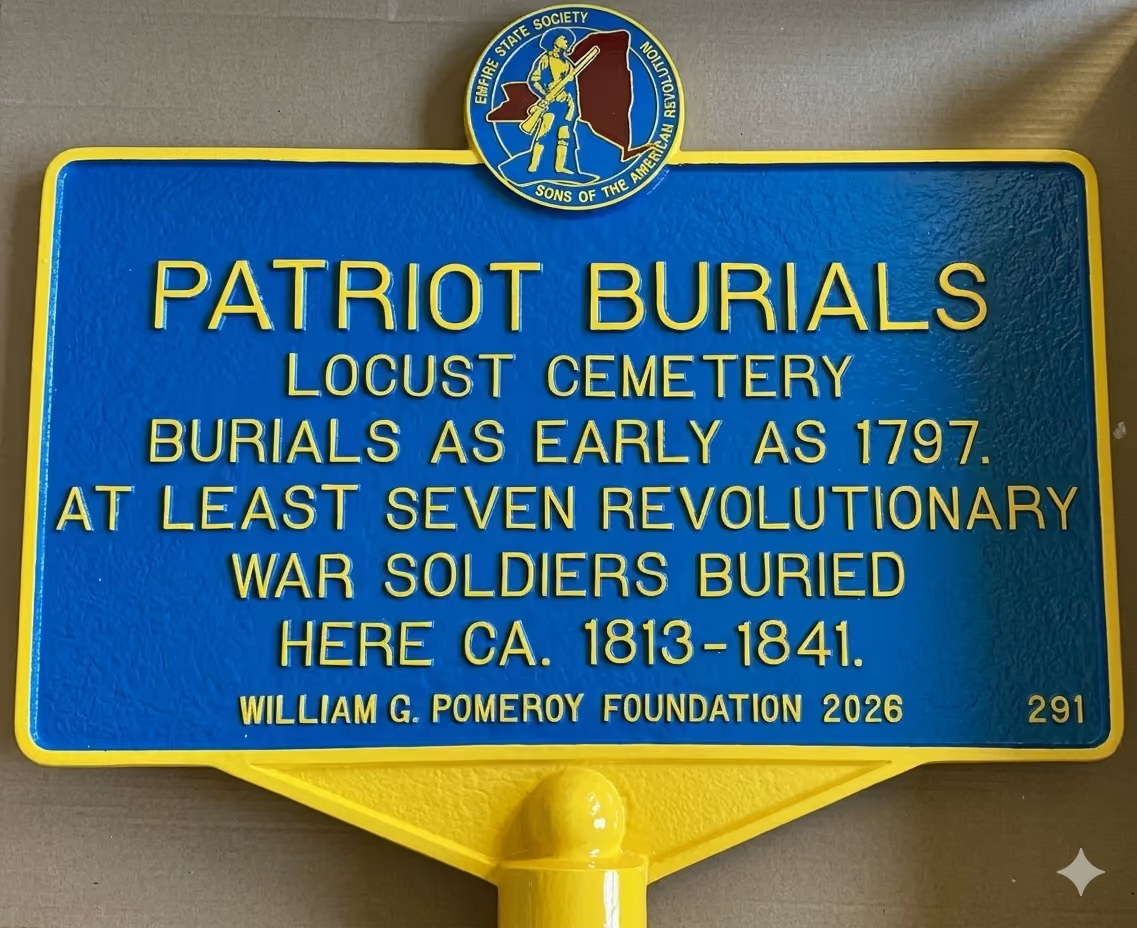
In 1926, the 150th celebrations took a decidedly historical, metered turn defined in New York largely by the efforts of the first generation of legally mandated public historians. These historians engaged in the work that gave us our first blue and gold roadside history markers.
The Bicentennial of 1976, by contrast, was a barnburner filled with reenactments, educational initiatives, a slew of local history publications prepared by local committees, and parties of all variety. It was a fitting celebration for a global superpower; a people confronted by doubt in the wake of Vietnam, humbled by the Civil Rights Movement, and uncertain about an increasingly global future seeking to re-center ourselves, take stock of our roots, and have a little fun.
The 250th is now upon us. The best-laid plans of mice and men often go awry, but plan we must, and it is this writer’s hope that you will join in some of the commemorative activities anticipated this summer.
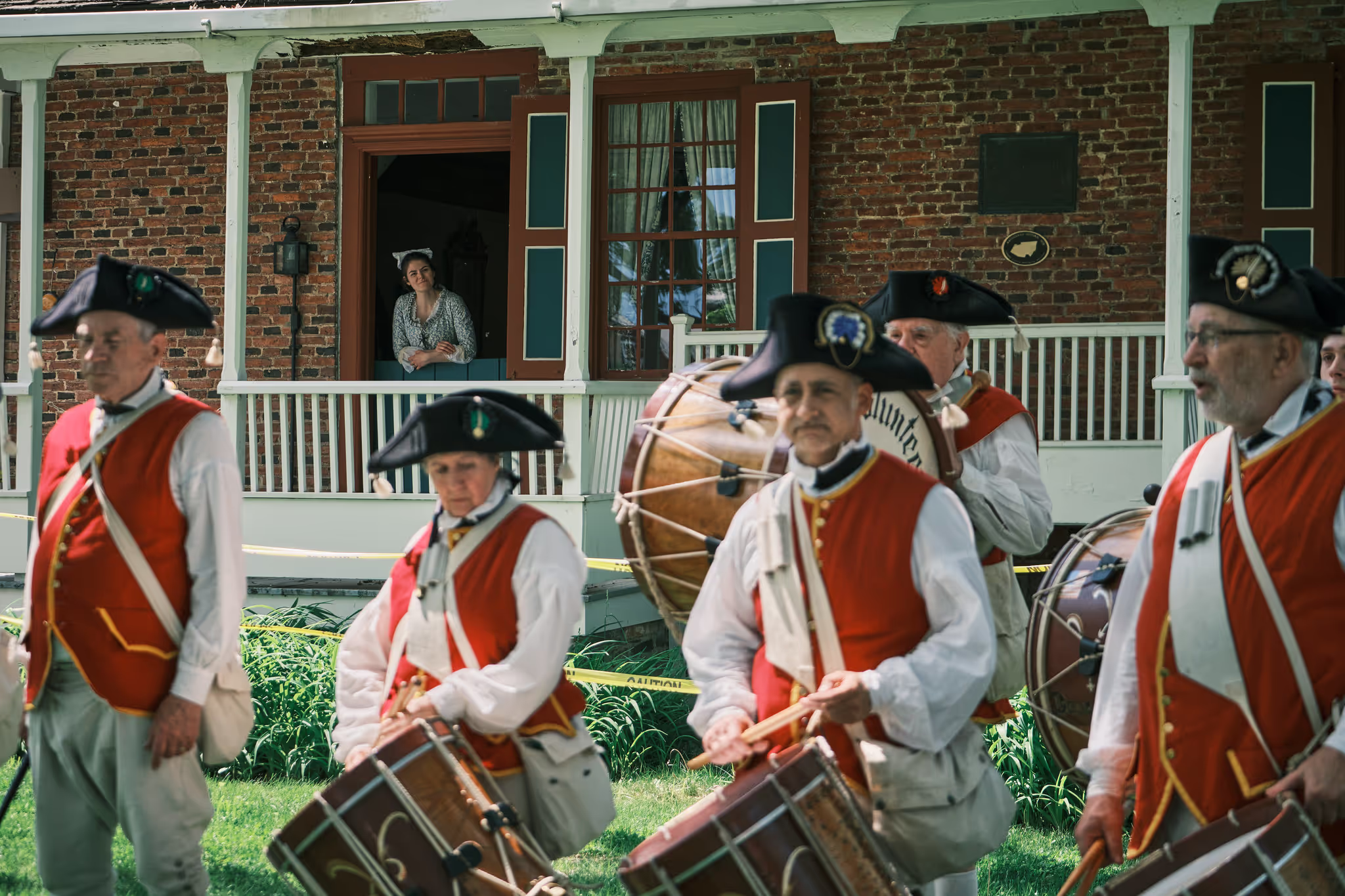
On Sunday, May 17, a general attendance is requested on the grounds of the Bronck House in Coxsackie for our annual Association Day. This event celebrates the anniversary of the signing of the Coxsackie Articles of Association in 1775 and will serve as a kickoff event for the summer season―complete with a fife and drum performance, historical lectures, and costumed interpreters.
Aside from marking this date on your calendars, I have one more bit of homework for you. Every history organization and community group planning activities this year that are at all history related should get serious about making their events known. This is easier to do than you think, as Greene County Tourism is putting together a 250th Calendar for the year. The only thing you need to do is fill out this handy events submission form at www.greatnortherncatskills.com/node/add/event so that they can be included on any upcoming promotions.
Stay tuned for further notes on goings-on and upcoming plans!
Questions and comments can be directed to Jon at archivist@gchistory.org.