The healing magic of food
Published on:
May 15, 2026



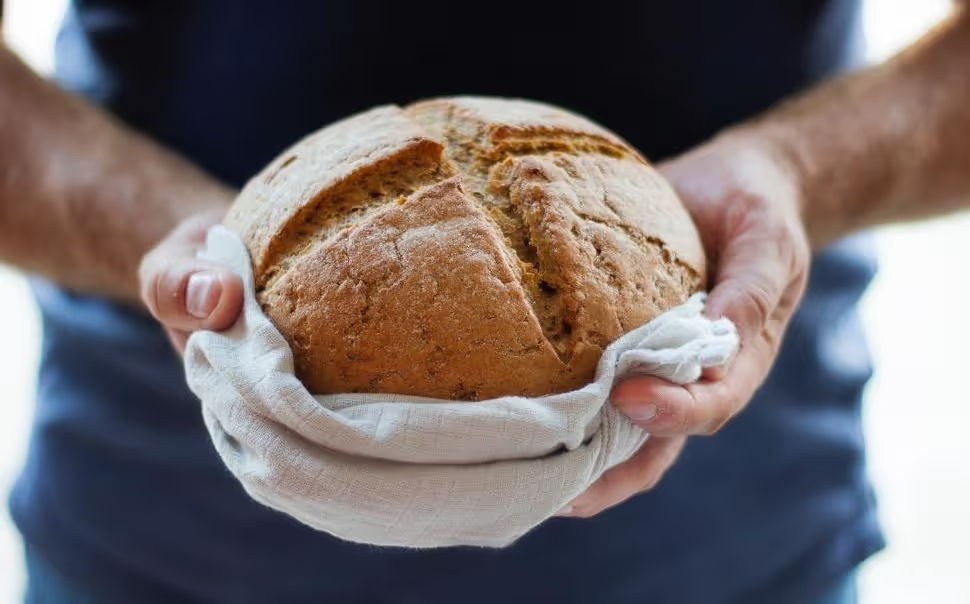



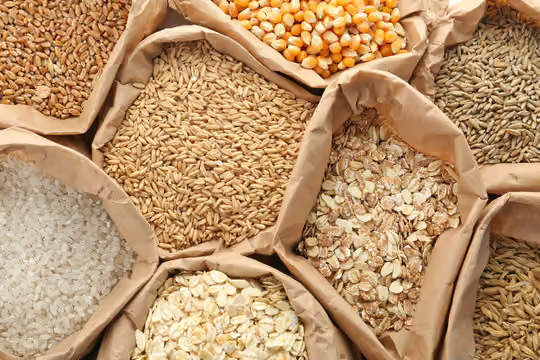
We all know to some degree the healing properties of food. At the same time, we acknowledge the gift of giving and providing of said food. In an Italian household, you never visit or enter another's home empty handed. A bottle of wine, a basket of goodies, perhaps a loaf of fresh baked bread. We find a great deal of comfort and satisfaction in this act. Food boosts one's spirits and enriches one's day.
I remember kidding with the school nurse, Loretta Crotty, while I was working at the Greenville school. Loretta would come into the kitchen each morning, tray in hand. She would get her quota of little half pints of orange juice that were to be handed out to various students throughout the day. In the beginning I didn't understand. But Loretta explained to me when she receives a student arriving at her door, the child is in need. Maybe ill, maybe just not having a good day. It was not so much the nutritional value, or the refreshing ice cold qualities of the hard to open paper carton―it was the gift of giving, providing a small token to a child, a young person who was in need. Something to make the day a little better and to put them on the right track for a day of learning.
I became further aware of the healing properties of food when a family member had been hospitalized for what seemed like an eternity, especially for him. Heart surgery, followed by a stroke, followed by a Covid scare. His job was―to put it plain and simple―listen to the doctor and get better. To "heal." But as loving laypeople, what can the family do? Yes we united, yes we planned for a better future and living environment, but what can we do now? What could we bring in our hands to make his day to day confinement better. Remember, never walk in empty handed.
We had obstacles. A lot of them. Our hands were tied. Anything brought in by us had to be low sodium and low fat. It needed to be low sugar, low carbohydrate and feasible in a hospital setting. It needed to survive a one to three hour trip to be delivered. Most of all it needed to be well received by the recipient. Forget about ordering some food items. They are never what they claim to be and most assuredly never created with the love a family member puts into it.
First, talk to the patient’s doctor directly about their dietary restrictions. Then, cook from home and bring it in. Don't be afraid to second guess yourself. After all, this is new to you and your loved one. It can get complicated. Strict guidelines must be adhered to. Believe me when I tell you they are not in place in the hospitals. It doesn't matter if an item is their favorite, it has to be safe. Remember "do no harm."
It is very difficult. When the patient’s case is complex, so is their diet. Do your research and definitely check the web. What maybe fine for the heart could possibly be bad for the kidneys. What is fine for diabetics may complicate a blood pressure issue. It can be a very daunting task, but it can also teach you to prepare meals during their future care.
Remember this, regardless of the individual’s needs, eventually we are all heading down a similar path. Perhaps preparing a restrictive diet is good practice for ourselves and other family members. He or she may be in the hospital today, but tomorrow it may be you. An eye opening food for thought.
Paul Ventura is a retired local chef. He is the owner operator of Ventura's Catering and Cheesecakes. A Greenville resident for almost 65 years and past food service director for the Greenville Central School District for 27 years. He has his education from GCS, AAS from Mohawk Valley CC, BA from SUNY Albany and continuing education degree from the CIA in Hyde Park. He has been in the food service industry for over 54 years.