Food for Thought: We eat first with our eyes
Published on:
February 7, 2026










First off glad to be back. To those of you who reached out to me to continue writing Food for Thought for Porcupine Soup, I thank you very much.
Why is food so important to our lives? Mankind has devoted so very much to our foods. Books, movies, professions, religious ceremonies, temple gods, language, all are steeped in the concept of food and what it offers us as a people. But how do we eat, and in what order?
Well, I believe and I think most chefs will agree, we eat first with our eyes. It may begin with the wording on a printed menu. It could be a quick glance as a server brings a plate to another table nearby.
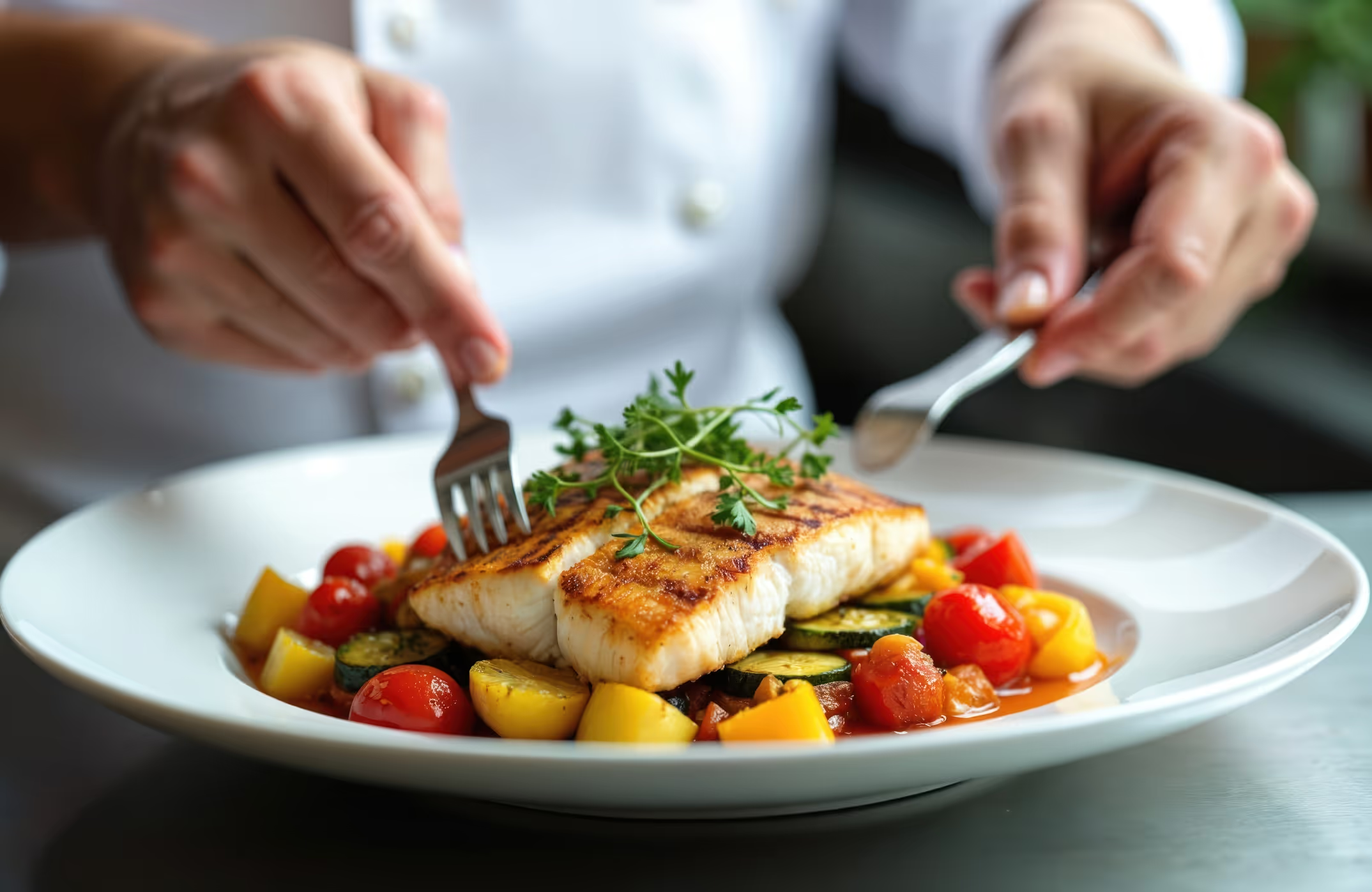
Personally, this chef believes it begins with the beautiful and carefully arranged garnished plate presented before us as we begin our dining experience. Color, composition, placement and texture of each item on the plate are so very important―as important as paint used in the creation of a masterpiece painting. Some chefs in the industry have perhaps taken it too far with science. Mechanically freeze-dried components, scallop foam and such. I appreciate the effort but having a piece of smoldering elm brought to my table so that I may enjoy the earthy flavors of my pheasant dish are a bit too much.
I like to begin with my palette or, as is the case, my white dinner plate. I choose white, after all a blank canvas is white. Sure, a gold leaf border is beautiful. Delicate filigree and an intricate boarder are all gorgeous, but I believe it can distract from the food. A simple white plate is my choice, often opposed by my better half.
General rule of thumb in the industry has changed over the years. For example, any and all garnishes used on a hot meal are to be cooked. No more sprigs of parsley or twisted orange slices should be used. Even a stem of fresh rosemary is to be tossed into the hot pan juices and placed just before serving. Another example is the "layering" or positioning of the components of the meal. No more separation with a visible surrounding border. Vegetables, grains and such are to be presented off center and sometimes under and to the side of the entrees. A final example is the stacking of the dish. Whatever the style, the sauce should be at the bottom next to the plate itself. No more ladle full of sauce to be dumped over the chosen dish. Less sauce is used and bigger emphasis is on the visual of the prepared entree. A chef can no longer, or should no longer, drown the entrees to cover a flaw in the cooking process. This keeps the chef on task as well as properly seasoning the dish. If a dish is pan fried, broiled or roasted, we should see the caramelization, not hide it.
The funny thing is that the first visual sets the tone for the dining experience. If it is off key or not quite right it can ruin our mindset of the meal we looked forward to and place our hard earned money on. It may taste great, but not look so great. The whole dining experience must be complete. The plate is perfect, the taste perfect! This leads to your date being perfect, your dining partner being perfect! That is food for thought.
Paul Ventura is a retired local chef. He is the owner operator of Ventura's Catering and Cheesecakes. A Greenville resident for almost 65 years and past food service director for the Greenville Central School District for 27 years. He has his education from GCS, AAS from Mohawk Valley CC, BA from SUNY Albany and continuing education degree from the CIA in Hyde Park. He has been in the food service industry for over 54 years.