Greene County asked to dig deeper for taxpayer relief
Published on:
November 5, 2026




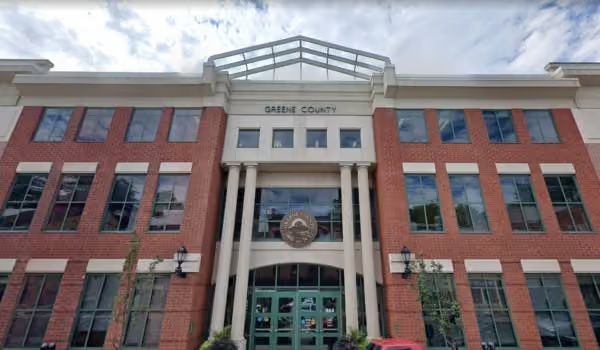





CATSKILL―There is no tax levy increase in the proposed 2027 Greene County budget even as there is a request to go one step further and lower taxes by busting open the piggy bank.
County legislature members last week held a public hearing on the fiscal plan that shows a $5.6 million rise in appropriations while keeping the burden on us mules of taxation unchanged at $27,404,370.
If lawmakers pass the $132,993,537 total package―which is expected―it would mark the eighth straight year the levy has remained flat. With one glitch.
The $27.4 million levy is proportioned among the 14 towns where equalization rates differ vastly, resulting in tax bills in some towns going up as others go down.
Under the proposed budget, county taxes will be increasing in Catskill (2.7%), Coxsackie (2%), Durham (6%), Greenville (1.3%) and Hunter (3.1%). County taxes will be decreasing in Ashland (4.6%), Athens (1.2%), Cairo (1.8%), Halcott (9.7%), Jewett (5.5%), Lexington (6%), New Baltimore (2%), Prattsville (1.9%) and Windham (4.6%).
Those disparities could be resolved by bringing all municipalities up to 100% in the state's very complex property assessment system, a solution much easier said than done due to the expense of performing a revaluation.
In the meantime, county officials are keeping their streak intact by juggling a pleasant plumpness of sales tax revenue and leftover money against never-ending leaps in the cost of doing everyday business.
It is a delicate balance that should be sustainable at least another year or two, according to County Administrator Shaun Groden, forewarning that “sales tax surplus will be shrinking at some point.”
Looking three years down the road, Groden foresees an inevitable leveling-off, already advising lawmakers that a fresh source of income, or perhaps more than one, will likely need to be found.
That could come in the form of a hotel occupancy tax that has previously been discussed, drawing mixed reviews from lawmakers and currently gaining no traction.
A second option, raising property taxes, is historically an unwanted and very unpopular choice, setting the stage for difficult future discussions.
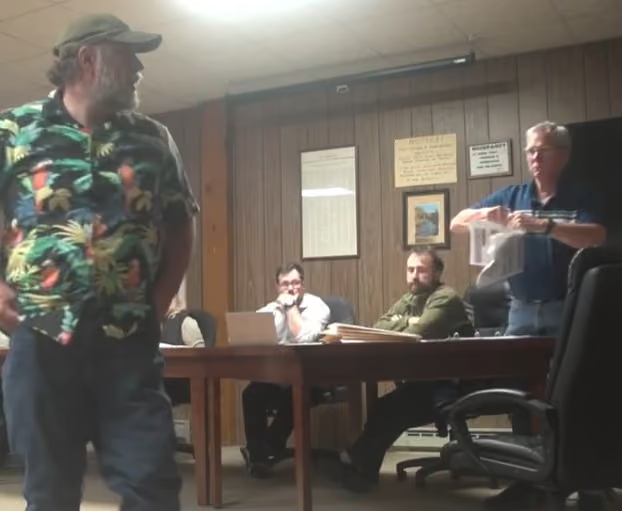
In the present, former legislator Joseph Izzo, who traditionally comments at the budget public hearings, again took the podium, asking lawmakers to dedicate as much as $1.6 million to ease the pecuniary pain of towns.
“Holding the levy flat was a positive accomplishment,” Izzo said. “But I believe the financial record now requires us to ask whether simply holding the levy flat goes far enough.”
“There must be a point at which sufficient reserves become excess reserves. And when that occurs, taxpayers deserve to be part of the discussion about what happens to their money,” Izzo said.
“I respectfully ask this legislature to take three specific actions before adopting the next county budget,” Izzo said, making the following requests:
- Establish and publicly disclose a specific reserve target for the General Fund and for county government funds;
- Identify the capital projects, debt obligations and other financial risks that justify maintaining reserves above those targets; and
- After those legitimate needs are funded, use a reasonable portion of remaining financial capacity to reduce the county property tax levy.
Izzo asked that lawmakers “adjust the tax levy to an amount that shows no tax increase for any town in Greene County.”
“You have the fund balance to do that,” he said.
An analysis of the budget was presented by Groden prior to the public comment period, showing $54.9 million invested from surplus funds in multiple infrastructure projects over the past seven years.
The outlays included upgrades to the county's four waste transfer stations ($15 million), a new Community Services Center ($16 million) and the purchase of highway department equipment ($2.4 million).
Some of the projects “normally would not have been done or would have been bonded, including interest. We have been able to pay cash,” said Groden, saving very substantial dollars.
Lawmakers also got a request from Hunter Town Supervisor Sean Mahoney to increase an economic boost given to all towns last year, when $1.5 million was gifted to help support emergency medical services.
Mountaintop municipalities are undertaking a consolidation of ambulance services presently administered by the towns of Ashland, Windham and Hunter as the whole system shifts toward a unified county network.
“I’m here this evening representing the supervisors of our mountaintop towns. I want to express our sincere appreciation to Greene County for recognizing the financial and operational challenges our towns face in providing ambulance service,” Mahoney said.
“The cost of providing reliable ambulance service continues to rise. Between wages, health insurance premiums fuel and the overall cost of living, our towns are facing increasing financial pressures,” Mahoney said.
“With that in mind, on behalf of the mountaintop supervisors, I’d respectfully ask the legislature to consider an eight percent increase in the county’s ambulance funding assistance to our towns in the upcoming budget,” he continued.
“We believe this is a reasonable request, as it is consistent with the proposed increase in the Greene County EMS paramedic budget,” Mahoney said, referring to the county-backed fly car system.
“We’re facing many of the same cost pressures as they are, and ultimately we’re all working toward the same goal of ensuring our residents and visitors have access to dependable emergency medical services,” Mahoney added.
The eight percent boost would mean finding approximately $130,000, officials said. The proposed budget also contains a new $6.8 million special district line item tabbed “ambulance fund.”
Those dollars will be set aside in advance of creating a countywide system, along with $2.2 million now channeled annually to the county fly cars.
Both requested changes are expected to be the topics of conversation in legislative committee gatherings in the coming weeks, prior to budget approval in mid-to-late November.