What protections do animal abuse registries provide?
Published on:
October 5, 2026







Two years ago, Columbia County enacted Local Law No. 3 of 2024, creating an Animal Abuser Registry. It was a welcome addition to the protections afforded to animals in our community and, on its face, a fairly simple concept. If someone is convicted of animal cruelty, there should be safeguards to help prevent that person from simply acquiring another animal and starting the cycle all over again.
But the recent conviction of Andrea Nussinow on three counts of animal cruelty involving horses exposed a troubling weakness in our local law. It is a weakness that, frankly, doesn't make much sense.
Nussinow was convicted under New York State Agriculture and Markets Law §353 following a case in which more than a dozen horses were seized and two horses ultimately had to be euthanized. At sentencing, she was prohibited from owning, possessing or caring for horses for five years, but may petition the court after three years for permission to possess up to two horses.
CGHS/SPCA has already expressed extreme disappointment with that sentence, especially with the chance to petition the court early to own animals again. But, more importantly, it prompted another look at Columbia County's Animal Abuser Registry and exactly what protections it provides.
That's where things get interesting. A conviction under §353, like Nussinow’s, is among the offenses that can place someone on Columbia County's Animal Abuser Registry. The local law then states: "No person who is registered or required to register... shall own, possess, or have custody of, any Companion Animal or Pet."
Those last five words matter. Elsewhere, the law defines "Companion Animal or Pet" and specifically states: "It shall not include a Farm Animal." Its provisions governing the transfer of animals to convicted abusers contain a similar exclusion: "This section shall not apply to Farm Animals for farmers."
Think about that for a moment. A person can commit an act of cruelty against ANY animal, such as horses, serious enough to result in euthanasia, a criminal conviction, and placement on Columbia County's Animal Abuser Registry. However, that registry can ONLY prevent that individual from acquiring a dog or cat. The county law does not provide the same blanket protection to farm animals, and unless specifically prescribed by the court, those convicted for cruelty to farm animals are free to go get some more.
Why should the species of the next potential victim make any difference? The short answer: it should not. Farm animals and companion animals certainly live different lives, but those differences should never determine whether cruelty against them matters. Farmers themselves understand this distinction. Raising livestock sometimes involves realities and responsibilities that those outside agriculture may not encounter or even like to think about. That does not diminish the obligation to treat those animals with respect and provide appropriate care. Nor should it ever provide cover for an animal being abused, overworked, neglected or tortured. There is a world of difference between legitimate animal husbandry and animal cruelty.
Growing up in Columbia County, I worked on several farms when I was younger and I came to understand firsthand how important the decent treatment of animals is in the agricultural trade. Our laws should recognize that difference without placing one class of animal beneath another when protection from cruelty is at stake.
In our next column, we'll continue this discussion and look just across the Rip Van Winkle Bridge, where Greene County's Animal Abuse Registry takes a decidedly different approach. That comparison provides an interesting look at what stronger protections can look like right here in our own region.
Feel free to call us with any questions at 518-828-6044 or visit our website at www.cghs.org. Our Food Bank is open to anyone from the public in need of pet food or for those wishing to donate food from 11:30 a.m. to 4 p.m. daily.
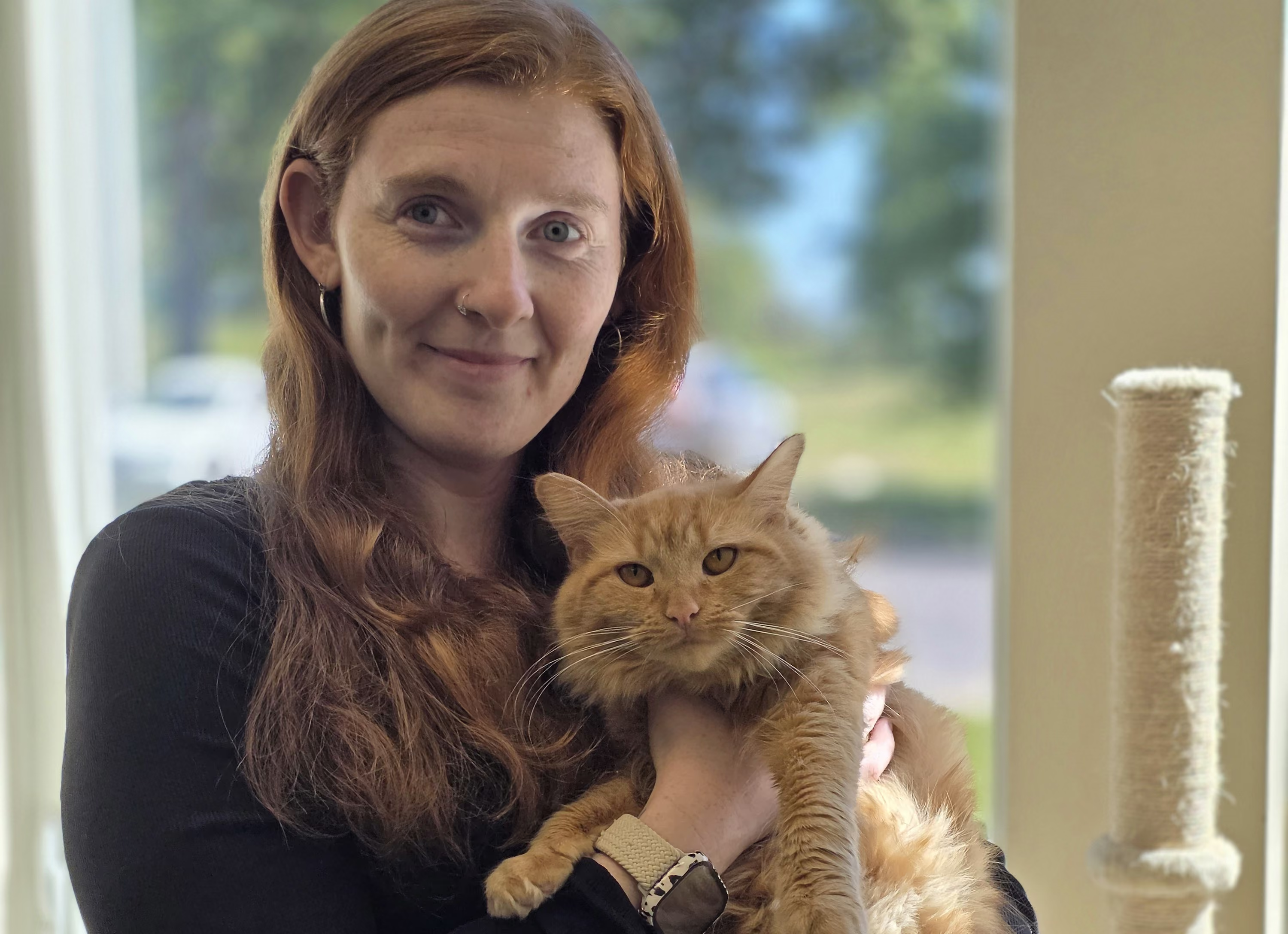
Ron Perez is the president/CEO and a peace officer and animal cruelty investigator at the Columbia-Greene Humane Society/SPCA. He may be contacted at ronperez@cghs.org.