Local voices shed light on struggles in changing communities
Published on:
November 17, 2026









CATSKILL— For some, it’s the struggle to find an affordable apartment. For others, it’s watching familiar neighborhoods change as longtime residents and businesses disappear. And for working families, it can mean watching their paychecks stretch thinner as the cost of housing, utilities and everyday necessities continues to rise.
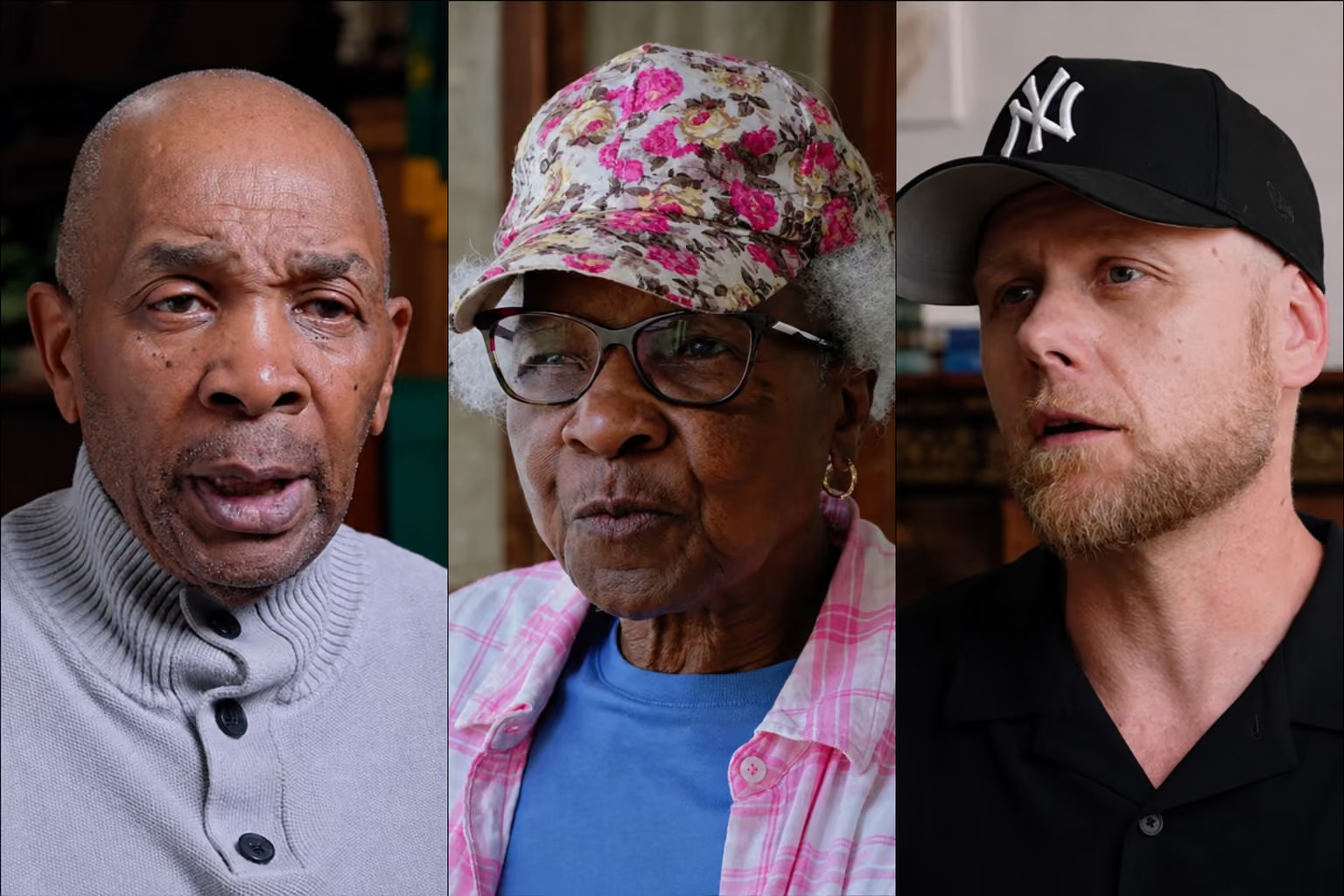
Those are among the experiences shared by residents of Catskill, Hudson and Albany in a new video series released by the Hudson Catskill Housing Coalition (HCHC), which is bringing community members’ voices into a broader conversation about housing affordability, economic pressures and the changing character of Hudson Valley communities.
Titled “Voices From Our Communities,” the series features firsthand accounts from people whose lives have been affected by rising living costs, limited housing options and neighborhood redevelopment. Rather than relying solely on statistics and policy discussions, the videos give residents an opportunity to describe what those changes mean in their everyday lives.
For Matt Van Tassel of Catskill, the financial strain extends well beyond the cost of housing.
“If I take my kids to the movie on Friday night it means the next Friday I’m not going to be able to put dinner on the table,” Van Tassel said. “Then it removes some of the joyful things in our life that keep us going, that keeps us engaging in community and just having a good experience in the midst of living.”
“What’s lacking right now is safety affordability, resources as a whole and just security,” said Shei T. Mason of Albany.
Jacquelyn Hotaling of Hudson offered an equally sweeping assessment.
“You want to know what people are struggling with in this community right now? Food, jobs, housing, wages, taxes, everything you could think of, they are struggling right now,” Hotaling said.
The coalition, a Black-led nonprofit organization working on housing justice, education equity and criminal justice reform, said the series is intended to encourage discussion about the obstacles facing communities and the role residents can play in addressing them.
Van Tassel said even finding a reasonably priced apartment has become a challenge.
“Yeah, I mean electricity bills have been through the roof. Housing, you know, to get into a decent place at this point, you are paying $1,800 a month or more to be honest,” Van Tassel said.
For Teresa Bryan of Hudson, the frustration comes from watching wages fail to keep pace with expenses.
“We got a cost of living raise of 60 cents. What is that paying for? And they thought they were doing us a favor,” Bryan said. “Like what are you happy for? I mean, we are happy for every cent that we get but 60 cents for a cost of living wage is nothing.”
Colleen McKinnon of Catskill said the pressure of making ends meet can be exhausting, particularly for people who are doing everything they can to maintain financial stability.
“It can be depressing at times because it feels like you are always struggling. And who wants to struggle all the time? You know, you work hard, you pay your bills, you go to church every week, try to stay positive, try to help others. Sometimes it’s a challenge because you know, you are only human, too,” McKinnon said.
Agazou Sanon of Hudson said the lack of opportunities has affected the atmosphere of the community itself.
“People get down, people get, you know, unmotivated,” Sanon said. “So, I think to me that’s probably been the biggest―just seeing people just their heads down. You don’t feel that energy anymore in the city because there’s no opportunities.”
For Sadie Wilburn of Catskill, the housing situation has become particularly difficult.
“I’ve never seen Greene County so expensive,” said Wilburn, 63, who is on disability.
Unable to secure affordable housing of her own, Wilburn lives with a relative.
“At this age I should be on my own,” Wilburn said.
Deacon Willie Davis of Second Baptist Church on Main Street in Catskill described a rental market in which available apartments are increasingly difficult to find, and those that do become available often carry prices beyond the reach of many residents.
“You can’t even hardly find apartments now… if you did find one, it’s done doubled or tripled in the last two, three years,” Davis said.
Jewell Chestnut of Catskill said the situation is particularly difficult for working-class households whose incomes do not stretch far enough to comfortably afford market-rate housing.
“It’s really sad for working class people… the rent now doesn’t reflect the jobs that we have,” Chestnut said.
Van Tassel also raised concerns about tenants being forced to leave as property owners seek higher rents.
“These landlords are kicking people out left and right,” Van Tassel said. “It’s like, you know, they don’t value their people who are staying in their houses at this point. As soon as they see that the rents are going up, and if you can’t afford the rents that are going up, you’re out and then the next person who can afford that is coming in.”
Jason Edmonds, a former longtime Catskill resident who now lives in Rensselaer County, expressed similar concerns about the influence of wealthier newcomers on the local housing market.
“A lot of people with money are coming up here. They are buying up properties and they’re pushing people out,” Edmonds said. “They don’t care cause they got money. They don’t care what you got or how you feel about it.”
For some, the issue is not simply the expense of housing, but the loss of a sense of belonging in places where their families have lived for generations.
Pia Carr also spoke about the displacement of longtime residents, describing an aunt who had lived on Warren Street for 50 years but could no longer remain there. Carr described the changes in the community as depressing.
Bryan recalled a very different Warren Street in Hudson, when Black families occupied many of the homes along the city’s principal commercial corridor.
“You grow up here and on Warren Street, from the top of Warren Street to the bottom of Warren Street, all those houses used to be filled with Black families,” Bryan said. “Now, you walk on Warren Street and like sometimes they look at you like you are a stranger. Like, what are you doing here?”
“Hudson has been becoming very tourism driven,” said Gabrielle Xavier.
“If you go up Warren Street now, there is nothing but antiques. All the things that used to be there are gone now. There is nothing here,” said Vivian Herring.
Hotaling questioned whether the growth of new businesses has been accompanied by enough investment in activities for young people.
“Ok, breweries and restaurants. But what do they have for the kids to do? Absolutely nothing. They have taken everything away from the kids,” Hotaling said.
Indya Roscoe of Hudson expressed similar concerns, saying neighborhood changes have reduced the programs and activities once available to children.
“I think with gentrification, it pushed a lot of programs out,” Roscoe said.
She acknowledged the continued availability of activities at Oakdale Park but said having one principal summer option does not meet the needs of every family. With fewer alternatives, she said, many children spend their summers at home or out on the streets.
Roscoe recalled a childhood filled with goings-on and familiar gathering places, including the Boys and Girls Club, playgrounds, vacation Bible school and the Black Festival. Local businesses also played an important role in creating a sense of neighborhood identity.
“When you walked up and down the street you knew people. It was actually stores like the Pizza Pit, Charlie’s Corner, Dons,” Roscoe said. “It was a close-knit community. Everybody looked out for each other compared to now where you don’t even know your neighbors.”
Katherine Ryan, who described herself as the first Black resident to move into the Hudson housing development at 35 North Third Street, recalled a community in which neighbors routinely helped one another.
“Holidays if one family was short, the other family joined in and got invoted to the dinner table. If a person was sick, the other person helped the next person,” Ryan said.
The recollections offer a contrast to the isolation and financial insecurity described by some of the other participants. While the videos acknowledge changes in the region, the residents’ accounts raise questions about who benefits from growth and whether longtime families can continue to participate in the communities they helped build.
The experiences described in the HCHC videos echo broader economic and demographic changes documented across the Hudson Valley, particularly during and after the COVID-19 pandemic.
In 2024, then-Hudson Mayor Kamal Johnson reported that the city had experienced a 13% decline in its overall population and a 50% decrease in its Black population, figures he cited amid concerns about the displacement of longtime residents.
That same year, Hudson Valley Pattern for Progress, a nonprofit research organization, released a report examining how migration from the New York City metropolitan area had reshaped communities throughout the region.
The report, “Incomes, Migration, and Gentrification in the Hudson Valley during the Covid-19 Pandemic,” found that relatively high-earning households moving north of Interstate 84 brought more than $1 billion in gross incomes into those communities.
The migration included a net gain of approximately 60,000 people who moved from New York City into the Hudson Valley during the pandemic. Although migration from the metropolitan area had been occurring for years, the report found that the pandemic dramatically accelerated the trend.
In Columbia, Dutchess, Greene, Sullivan and Ulster counties, the annual amount of income brought into communities by new residents increased by as much as tenfold compared with pre-pandemic levels.
During the height of the pandemic, households moving into Columbia County reported an average adjusted gross income of $166,107, compared with $68,812 among those moving out, according to Pattern for Progress.
Pattern for Progress acknowledged that the influx brought economic benefits, including new businesses, additional spending and renewed investment in downtown areas that had previously struggled. However, the organization also found that migration accelerated gentrification and intensified housing affordability problems.
“Counties who became home to new high-income households also saw the highest jump in median home prices, as new residents paid more than the asking price for homes and often paid all cash,” Pattern for Progress stated in its report. “These trends pushed the median home price far beyond what longtime Hudson Valley residents could afford.”
The consequences extended to renters as households unable to purchase homes remained in the rental market, increasing competition for available apartments.
“With homeownership out of reach for so many, thousands of more households have persisted in rentals, putting upward pressure on the rental market. Wages have not kept pace with housing costs,” the Pattern for Progress report stated.
In Greene County, the changes have been reflected in both home prices and rental costs. Before the pandemic-driven real estate boom, median home values and closed single-family home sale prices generally hovered between $195,000 and $210,000.
By 2025, the median home sale price had climbed to $350,000, according to the New York State Department of Taxation and Finance. Figures from Realtor.com show that, as of October 2026, the median listing price for a home in Greene County was $457,000, while the median sold price was $392,500. The website reported a median monthly rental price of $2,100.
A 2023 Workforce Housing Attainability Assessment prepared for Greene County Economic Development identified similar concerns.
“Recent spikes in housing costs both locally and nationally have exacerbated the county’s affordability challenges,” the assessment stated. “Wage growth has not kept pace with housing cost increases, meaning that housing units that may have been affordable to certain segments of the county’s workforce just a few years ago are now out of reach.”
The assessment found that the estimated monthly payment on a median-priced home sold in Greene County had increased from $1,107 in 2018 to $2,510 by 2022. At the time, the median worker in Greene County earned approximately $41,000 annually.
The report strikingly identified a longer-term challenge: Many of the occupations projected to experience the fastest growth over the following decade were among the county’s lower-paying jobs. Together, the 25 fastest-growing occupations had a median annual wage of approximately $35,000.
The assessment also found that rising construction costs, land prices, inflation and higher interest rates were making it increasingly difficult for private developers to produce housing affordable to local workers without some form of public subsidy.
Catskill Village President Natasha Law watched the HCHC video series and said the issues raised by residents need to be considered when planning for the village’s future.
“It is a vital conversation… many local leaders often skirt around the word gentrification when discussing growth. I do not believe I am personally one of those people though,” Law said.
She acknowledged the economic benefits of new investment while emphasizing the need to protect housing opportunities for existing residents.
“Influx of new investment isn’t bad and we need the tourism and a thriving downtown. As a renter myself here in the village, I see firsthand and understand the struggles our community faces,” Law said.
On the obstacles to creating more equitable communities, Law said:
“When looking at what stands in the way of equitable communities, the main issue is that cost-of-living rises faster than we can build affordable places for local people to live,” Law said. “Moving forward takes open communication and real, practical policy work.”
Law pointed to several measures adopted by the village in recent years that she said are intended to address housing affordability and protect existing residents.
Among them is the village’s decision in November 2024 to opt into New York state’s Good Cause Eviction law, which provides eligible tenants with protections against certain evictions, lease nonrenewals and unreasonable rent increases.
The village also updated its accessory dwelling unit regulations in April 2025, allowing additional residential units on qualifying properties to expand long-term housing opportunities.
Law also cited the village’s short-term rental regulations, fair housing measures and residential anti-displacement and relocation plans. The village recently completed its third recertification as a Pro-Housing Community, a state designation tied to local efforts to support housing growth.
“In Catskill, we haven’t just talked about the problem. I’ve rolled up my sleeves to tackle it head-on,” Law said.
One of the largest potential additions to the village’s affordable housing supply is a proposed $31.4 million workforce housing development at 506 Main Street, the site of the village-owned Park for Paws dog park near the upper end of Main Street. The project has been awarded $1 million from the village’s $10 million Downtown Revitalization Initiative grant.
“Looking ahead, we have a major housing project coming to the table that will create 70 affordable units right at the top of Main Street which has many hurdles in the way but I’m committed to seeing it through,” Law said.
Other Hudson Valley communities have taken similar steps to address housing affordability and displacement. In November 2021, the city of Hudson completed an Affordable Housing Development Plan developed by Hudson Valley Pattern for Progress. Building on earlier planning efforts, the report outlined actionable measures to expand affordable housing opportunities and help prevent the continued displacement of longtime residents.
“Balance is entirely possible, but it requires local leaders to lean into these hard conversations and take concrete policy steps,” Law said.
The release of “Voices From Our Communities” comes as HCHC prepares to celebrate its sixth anniversary with a gala on Thursday, November 19, in Hudson.
This year’s theme, “We Cleared the Way: Clean Slate. Collective Freedom,” recognizes the organization’s work on housing justice, education equity and criminal justice reform, including advocacy surrounding New York’s Clean Slate Act.
The anniversary event will feature keynote speaker Alicia Garza, founder of Black Futures Lab and co-creator of Black Lives Matter. Community leaders and advocates who have contributed to the organization’s efforts will also be recognized.
Earlier that afternoon, HCHC will host a Community Leadership Workshop facilitated by Garza. The workshop is intended to bring together grassroots leaders, organizers and advocates to discuss challenges facing their communities, exchange ideas and explore approaches to strengthening local organizing efforts.
And while community leaders continue to explore ways to address those challenges, questions remain about what it will take to ensure meaningful, lasting change.
The individuals featured in the HCHC video series bring different experiences and perspectives, but many share a common concern: whether the places they have called home for years, or even generations, will remain places where they can afford to live, raise families and feel a sense of belonging.
For Gabrielle Xavier of Hudson, that desire captures what is at stake.
“I know that me and a whole community is yearning for that feeling of being secure in the community that you grew up in,” Xavier said.
The “Voices From Our Communities” video series can be viewed on the Hudson Catskill Housing Coalition’s YouTube channel.