Hannacroix Hill Farm grows thousands of tulips―in the dead of winter
Published on:
February 10, 2026





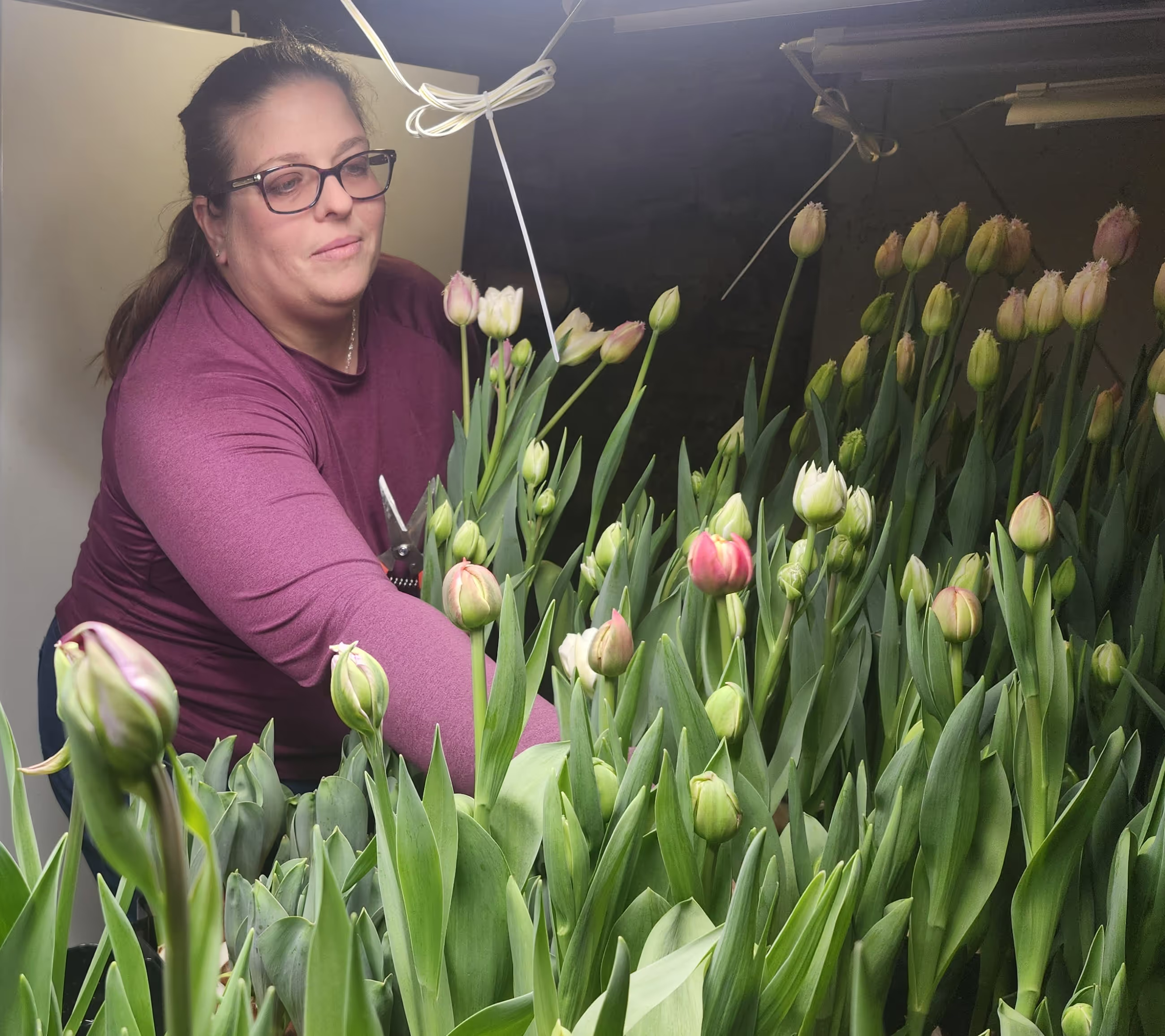





HANNACROIX―It may be bitter and bleak outside, but that doesn’t stop Nicole Schmitt from growing thousands of bright and colorful tulips in the dead of winter.
At Hannacroix Hill Farm, Schmitt produces tulips, from bulb to bloom, using a process known as hydroponics, a type of soilless gardening that requires no chemical inputs: just water and light.
“We don’t grow your typical varieties,” said Schmitt, who has turned the basement and several rooms of her 1850 farmhouse into a full-scale tulip factory.
There are elegant fringed tulips with delicate, lace-like edges on their petals. Peony tulips are multi-layered showstoppers that could almost be mistaken for a peony. And parrot tulips have ruffled petals that resemble bird feathers.
“We did a little over 5,000 last winter,” said Schmitt, who describes Hannacroix Hill Farm as “small scale” compared to some other winter growers.
Still, another 6,000 bulbs are in the ground outside awaiting their traditional spring debut.
Inside, shelves, refrigerators and walk-in coolers hold hydroponic “prick” trays that are filled with water and have spikes to hold bulbs upright. The correct light, temperature and humidity is crucial during different stages of development.
“The process actually starts about a year before they bloom because we have to order bulbs well in advance so they can be cooled at least 18 weeks before we can start the process here on the farm. Once we pull the bulbs from the cooler to initiate the growing process, it takes six to seven weeks to bloom,” Schmitt explained.
A Cornell Cooperative Extension Master Gardener and active member of the Association of Specialty Cut Flower Growers, Schmitt is also a graduate of The Tulip Workshop in Waitsfield, VT that teaches the art and science of bulb forcing during the off season.
“I start new trays every week so we have a fresh succession of blooms available each week,” she said.
Located on County Route 26, Hannacroix Hill Farm’s winter production grows around 500 stems each week and sells out through area farmers markets and events, and Johnk’s Family Farm in Greenville.
“Fresh bouquets that are grown locally often have a superior vase life because they are harvested at the right stage, conditioned, and go from farm to table very quickly as opposed to having to spend days in transit through the traditional import process,” Schmitt said.
“Our flowers are clean, thoughtfully grown, and 100% free from chemical applications,” she added.
They also offer a Community Supported Agriculture (CSA) flower subscription that provides members with fresh bouquets.
“It’s a self-care easy button,” said Schmitt, noting that flowers can help beat the winter blues.
“Seasonal Affective Disorder is real,” she added, referring to SAD, a type of depression linked to reduced sunlight in the late fall/early winter.
Multiple studies have found that flowers can help improve mental health by triggering happy brain chemicals.
“Flowers have a remarkable impact on focus and creativity,” Schmitt said.
“I can attest to this experience firsthand. In addition to running Hannacroix Hill Farm, I work full-time in a high-pressure corporate role, spending long hours at a desk. For years, I have made it a priority to keep fresh flowers nearby. The benefit is simple as they offer me a moment to pause, encourage me to take a deep breath, and reset to move forward with the tasks ahead,” she added.
And while not everyone experiences SAD or works in a high-stress environment, Schmitt said there is a broader impact to consider.
“Choosing locally grown winter tulips is a meaningful alternative to imported flowers, which are often over a week old before they reach your home, treated heavily with pesticides to meet international shipping requirements, and transported thousands of miles,” she explained, pointing out that an estimated 80 percent of flowers sold in this country are imported.
A New York Grown & Certified farm, Hannacroix Hill Farm’s bulbs are sourced from Ampersand Bulb Co., a New York based supplier, and their soil-forced bulbs are grown in soil that comes from McEnroe Organic Farm, a certified organic operation in the Hudson Valley.
“Just as a farm-fresh tomato tastes better, locally grown flowers offer unmatched freshness and longevity, without the environmental cost,” Schmitt said.
For more information, check out Hannacroix Hill Farm at www.hannacroixhillfarm.com.