Clearwater donates Great Hudson River Revival signs to state museum
Published on:
October 13, 2026





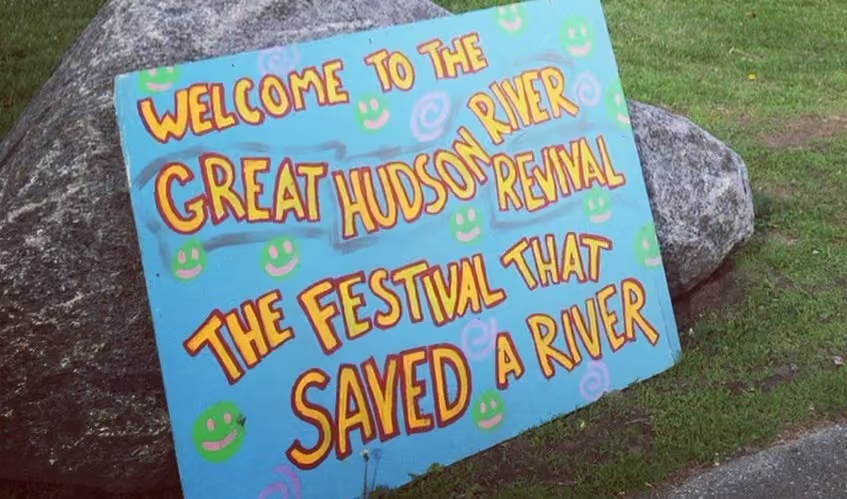





ALBANY—Hudson River Sloop Clearwater has donated its collection of more than 450 hand-painted signs from the Great Hudson River Revival to the New York State Museum, preserving four decades of history from one of the nation's longest-running music and environmental festivals.
A selection of signs and artifacts are now on display in a temporary exhibit at the New York State Museum and will reopen with a larger exhibition in 2028 or 2029.
Painted by festival volunteers over decades, the colorful signs guided festivalgoers through the annual event at Croton Point Park while reflecting the creativity, environmental values, and community spirit that became hallmarks of both the Revival and Clearwater itself.
The Great Hudson River Revival grew out of free, pass-the-hat fundraising folk picnics held across the Hudson Valley and organized by Clearwater founder Pete Seeger to raise funds to build the organization’s sloop, Clearwater. Over the decades, the Revival grew into one of the nation's largest and most influential music and environmental festivals. It became nationally recognized for its pioneering Zero Waste program, which demonstrated how large public events could dramatically reduce waste and inspired similar sustainability initiatives at festivals across the country.
The event continued in its traditional form until the COVID-19 pandemic and was produced virtually in 2020 and 2021. The Great Hudson River Revival continues at Clearwater through projects including the annual Clearwater Folk Picnic, coordinating music for the Kingston Earth Fair, Music Sails, and its 2026 Concert Series celebrating the 60th anniversary of Clearwater’s original Folk Picnics.
"The Great Hudson River Revival grew from Pete Seeger's belief that music could bring people together to care for the Hudson River and the world around them," said David Toman, executive director of Hudson River Sloop Clearwater.
"That belief still guides Clearwater today. We're honored to preserve the history of the Revival and have the impact of the festival live on through the New York State Museum educational and institutional lending programs,” added Toman.
"These signs and artifacts are more than mementos from a beloved festival; they are vivid records of a movement that helped change the way New Yorkers understood and protected the Hudson River,” said Jennifer Saunders, director of the New York State Museum.
“When evaluating items for the State Museum’s collection, our curators consider the stories they can tell both today and for generations to come, and our collection would be incomplete without artifacts reflecting the environmental activism and community-centered advocacy of the Great Hudson River Revival and Clearwater. We are grateful to Clearwater for entrusting this remarkable collection to the people of New York and look forward to continuing our partnership to preserve and share the legacy of Pete Seeger and the thousands of people who performed, volunteered, organized, and advocated for one of our state’s most important waterways,” said Saunders.
The donation comes as Clearwater continues to advance its mission through environmental education, advocacy, and music. Today, live music remains central to the organization's work through public sails, community events, educational programming, and performances that connect audiences to the Hudson River and the folk traditions that helped launch the modern environmental movement.
"As Clearwater celebrates the 60th anniversary of Pete Seeger's original folk picnics, we're reminded that this work has always been rooted in people gathering to make music together," said Steve Stanne, Clearwater board member, musician, and chair of the Music Committee.
"From those early pass-the-hat concerts to the Great Hudson River Revival and now our revived Folk Picnics and 2026 concert series, this tradition continues to evolve while staying true to its original purpose of bringing people together in support of the Hudson River,” said Stanne.
The donation is made possible by the generous support of Harper House Music Foundation, a public charity dedicated to preserving the unique legacy of musicians and supporting a diverse music landscape through grantmaking.
"We are proud to support the important legacy of Clearwater's Great Hudson River Revival that was built over decades and whose spirit is preserved in these signs and artifacts," said Steve Sullens, founder and president of Harper House Music Foundation.
"Housing them at the New York State Museum ensures that history lives on for generations to come. Our own work sponsoring the Hudson River Music Festival carries forward that same spirit of bringing people together in service of this community and the river Pete Seeger loved,” said Sullens.
The signs will be on view at the New York State Museum in a temporary exhibit opening on Saturday, October 10, 2026, through April 25, 2027, with additional opportunities for public engagement anticipated in the coming years.
About Hudson River Sloop Clearwater
In 1966, folk singer Pete Seeger and a group of activists decided to “build a boat to save the river,” envisioning that a sloop would bring people to the shoreline and inspire a movement to protect the Hudson River. Three years later, Clearwater set sail with a mission to save the Hudson through education, advocacy, and sailing. Today, Hudson River Sloop Clearwater remains resolute in this mission, and to date, more than half a million people have had the life-changing experience of sailing aboard the Clearwater. Learn more at https://www.clearwater.org.