Chronic wasting disease found in wild deer; first time since 2005
Published on:
November 11, 2026



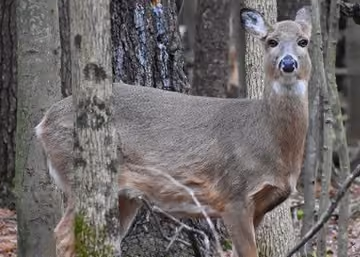





The New York State Department of Environmental Conservation (DEC) has announced a confirmed positive case of chronic wasting disease (CWD) in a wild deer harvested in the town of Sparta, Livingston County. This is the first occurrence of CWD in a wild deer in New York state since 2005.
A CWD-positive deer was found in 2024 on a deer farm in Herkimer County, but preventive measures stopped the disease from spreading to wild deer outside the facility. The latest positive result was discovered through ongoing monitoring efforts.
CWD is an always-fatal transmissible disease that affects the brain and central nervous system of deer, moose and elk.
There is no evidence that CWD is linked to disease in humans, domestic dogs or cats, or domestic livestock other than deer, moose and elk. However, the Centers for Disease Control and Prevention (CDC) recommends not consuming venison from any deer known to have CWD.
DEC began CWD monitoring efforts in 2002. In 2005, CWD was confirmed in captive deer at a state-licensed deer farm in Oneida County, where it spread to wild deer outside the facility's single fence.
The disease was discovered through a targeted enforcement partnership between New York State environmental conservation officers (ECOs) and veterinarians from the New York State Department of Agriculture and Markets (AGM), who suspected CWD would be found at a captive deer facility in New York. That initiative uncovered the first occurrence of the disease in the state.
CWD was successfully contained by DEC and AGM in 2005 through immediate containment measures, including aggressive culling of wild deer surrounding the captive deer facility.
I am not aware of any other state that has successfully eliminated CWD once it was detected in a wild whitetail deer herd. Kudos to DEC's wildlife biologists, ECOs and veterinarians at AGM for successfully stopping CWD in its tracks back in 2005.
New York remained free of detected CWD cases due to the aggressive culling response and ongoing testing efforts. Since 2002, DEC has tested more than 70,000 wild deer statewide, with no additional cases discovered during that period.
It was not until 2024 that CWD was once again confirmed on a captive deer farm, this time in southern Herkimer County. Once again, DEC and AGM conducted aggressive culling and testing efforts.
The immediate culling of sufficient numbers of wild whitetail deer is essential to containing CWD. That, in conjunction with extensive testing, seems to be the best way to stop the spread of the disease.
The latest discovery has triggered implementation of New York's CWD Response Plan, developed jointly by DEC and AGM. The plan outlines the steps both agencies will take to determine the prevalence of the disease in the area, along with additional sampling and containment measures DEC intends to implement.
All deer harvested in six towns must be submitted for testing
In light of ongoing and upcoming deer hunting seasons, New York state will first rely on hunter-obtained samples to determine the extent of the outbreak and prevalence of CWD among wild deer in the area. Results from initial sampling will inform DEC's disease management and containment efforts.
Containment area established
New York state is establishing a containment area that includes the towns of Conesus, Groveland, North Dansville, Sparta, Springwater and West Sparta. DEC may expand or add containment areas based on the locations of any new positive detections.
DEC will require hunters to submit a tissue sample from all deer harvested in the containment area. Hunters may not transport whole deer out of the containment area. A transport permit provided by DEC is required for all deer harvested within the containment area and taken to a processor or taxidermist outside the area.
DEC encourages all hunters and processors to tag deer harvested from the containment area with paper carcass tags or change-of-possession tags to confirm the location of harvest.
Collection stations
DEC is establishing collection stations within the containment area for hunters to submit samples from harvested deer.
DEC will begin collecting on-site samples Nov. 12. Locations and hours of operation for these collection stations, along with additional collection information, will be available on DEC's website.
Hunters who harvest a deer in the containment area before collection stations open should save the head and email DEC at cwd.response@dec.ny.gov. Hunters who report a harvest in the containment area may be contacted by DEC.
DEC is also working with local meat processors and taxidermists to collect samples. Hunters will be notified if their deer tests positive for CWD, and DEC will request collection of the venison for proper disposal.
DEC and AGM will contact and request records from all captive deer herds in the area. The public is encouraged to report any sick or dying deer to DEC for possible collection and testing.
Once the extent of the CWD outbreak and its prevalence within the wild deer herd are determined, DEC and AGM will decide how best to proceed with a disease management strategy.
DEC is implementing CWD-related regulations to ensure the proper handling of live captive deer, deer carcasses and deer rehabilitation to prevent further spread of the disease.
DEC's CWD regulations will:
- Prohibit the movement of high-risk animal parts out of the containment area, such as the brain, spinal cord, spleen and eyes;
- Establish mandatory hunter sample submission for any deer harvested in the containment area;
- Prohibit possession of any deer killed by a motor vehicle in the containment area;
- Prohibit the collection, sale, possession or transport of deer or elk urine taken from the containment area; and
- Prohibit rehabilitation of wild white-tailed deer from or brought into the containment area.
- DEC will host a virtual informational session to inform stakeholders and deer enthusiasts about the disease and discuss future management and containment plans. The webinar will be held Tuesday, November 17, at 7 p.m. Register for the webinar online here.
Additional in-person public outreach opportunities will be held in Livingston County. Details will be available on DEC's website once they are scheduled.
The regular firearms season for deer in the state's Southern Zone opens Saturday, November 21.
Hunters who harvest a deer in New York outside the containment area can pay to have their deer tested. To learn more, visit the Cornell University Wildlife Health Lab website.
DEC has produced a video in which wildlife biologist and Big Game Unit Section Head Brendan Quirion explains what has occurred and DEC's planned response to the CWD-positive finding.
More information on CWD in New York state can be found on DEC's website.
Happy hunting, fishing and trapping until next time.
Remember to report poaching violations by calling 1-844-DEC-ECOS.
News and notes
Columbia County Sportsmen's Federation holding breakfast to celebrate veterans
In honor of Veterans Day, a free breakfast for veterans will be held Sunday, November 15, from 11 a.m. to 2 p.m. at Copake Town Park Hall.
A resident of Durham, Larry is a retired captain with the New York State Department of Environmental Conservation.